Hi! I’m Viktor Golikov, a motion designer with a background in communication design. I approach motion as an integrated part of a system, not merely as an added effect. I love building things in 3D, and I am drawn to concepts where the form itself conveys the meaning.
I study design at HSE and co-lead arii, a small creative technology studio.
Tools: Blender, After Effects, Cavalry, Premiere Pro, Indesign, Cinema 4D, Touchdesigner, Houdini, Substance Painter.
I am open to motion designer positions or project-based work!
Titane: Alternative Opening Titles
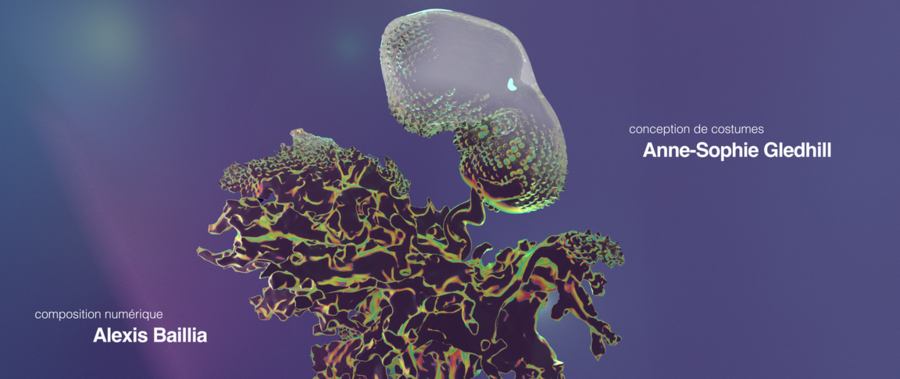
a title sequence about a body being taken over by machine fluid
The idea
Alternative opening titles for Julia Ducournau’s «Titane.» The film explores the hybridity of body, identity, and machine, blurring the line between human and mechanical through extreme imagery, violence, and bodily transformation. The titles are built around one event from the film: the takeover of the heroine’s body by a petroleum liquid after she becomes pregnant by a car.
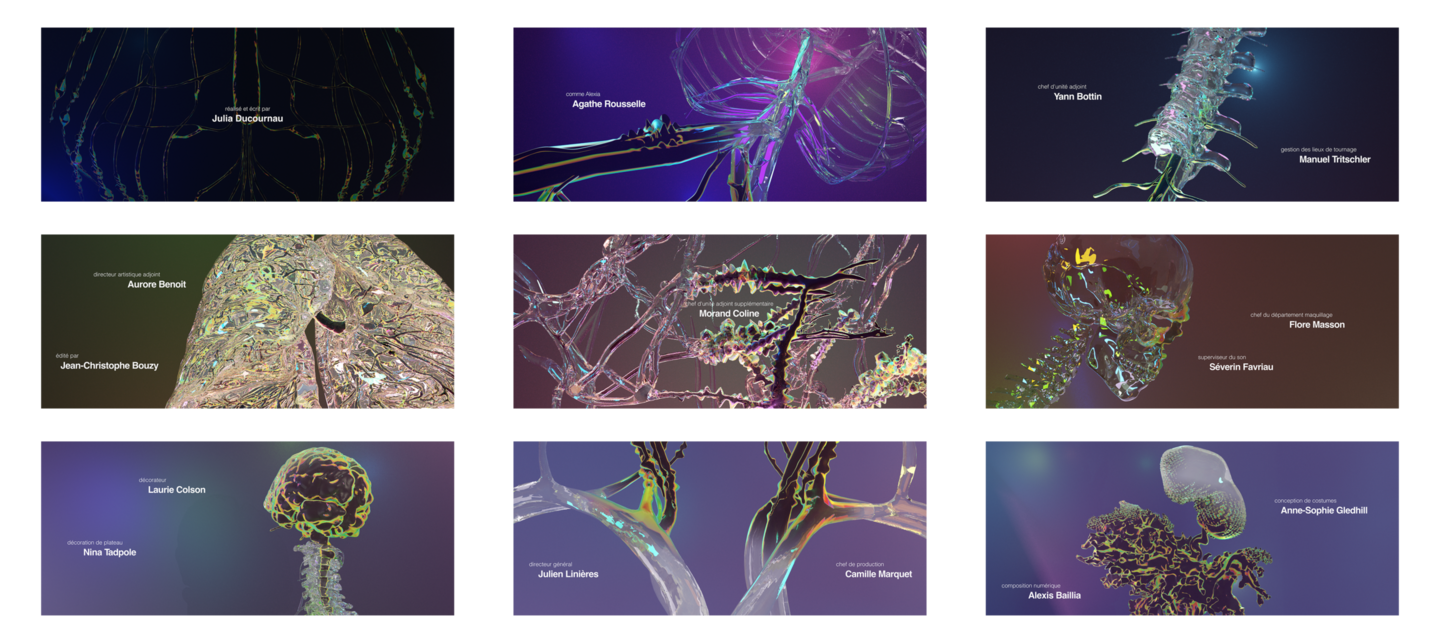
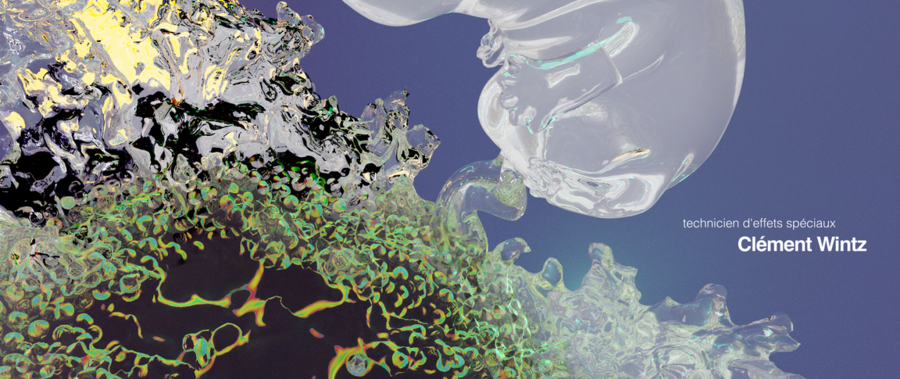
Visual Approach The sequence is built from 3D scans of organs and bones. Each is rendered with a glass shader, giving the anatomy a fragile quality. Oil flows through these forms, deforming them, and as it spreads, the glass fills darken and change surface. This transformation is the entire narrative of the film, which I decided to represent through titles.
*Russian cultural script
Collaborative project—a festival animation that deconstructs the unwritten rules of Russian speech into minimal visual units
Co-authors:
Anna Sarkhanova
Ksenia Chepanova
The Idea
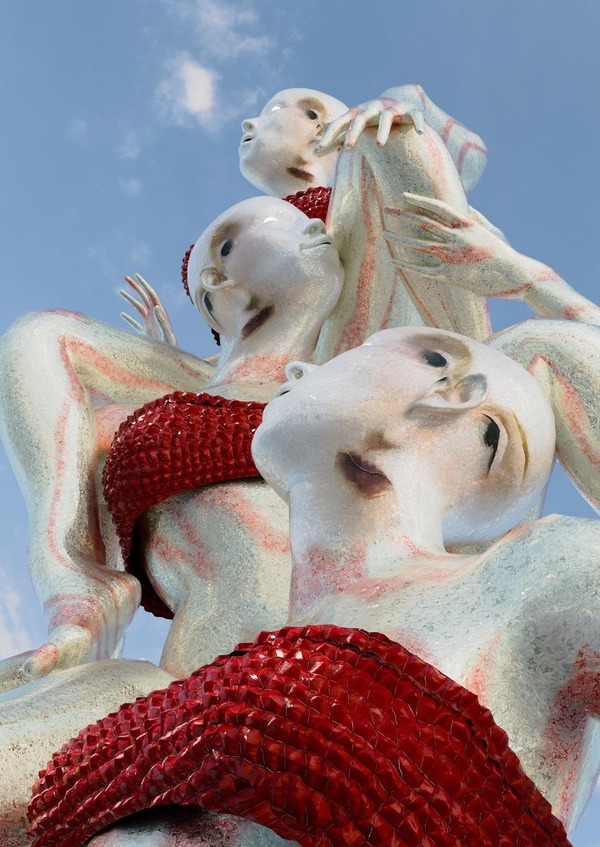
A collaborative animated film for an Intervals festival, based on the concept of cultural scripts: shared, seldom-questioned beliefs about what constitutes good and bad speech, which are reflected in language.The film engages with the Russian script outlined by linguist Anna Wierzbicka in «Semantic Universals and Basic Concepts.» Her text is written in a universal semantic language, where complex cultural meanings are deconstructed into simple words common to every language. The film uses her terminology as its foundation.
Visual approach
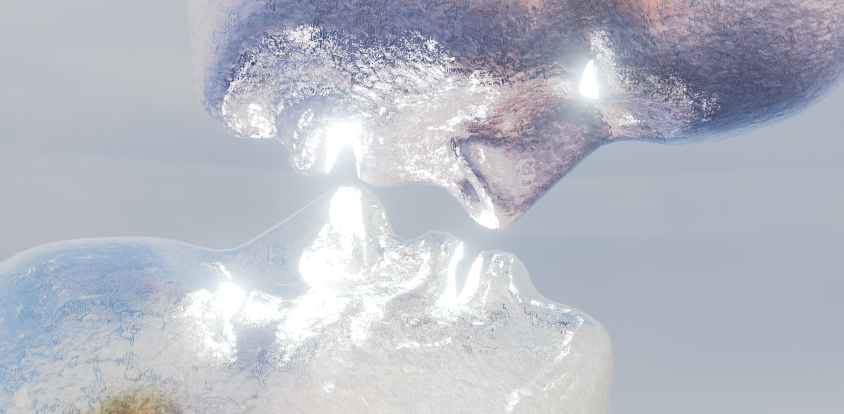
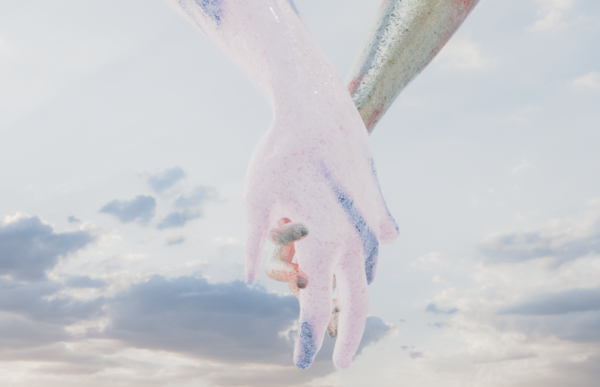
The visual language follows the same principle. Complex meanings are broken down into minimal visual units: a glance, the shape of the mouth, a gesture, the distance between bodies. These function as «atoms» that combine into larger constructions. Unlike the abstract universality of the linguistic model, the system retains a trace of subjective experience: the basic forms are reassembled through the artist’s own bodily memory and emotional associations.The animation resides in the tension between normative speech culture and the personal act of speaking.
My Role
I was responsible for 3D modeling, animation, and rendering.Music: TURNOFFYOURDRUMMACHINE — GODZILLA
Why You Can’t Trust Your Memories
Collaborative project: an explainer on how memory functions, and how therapy and hypnosis alter the past
Co-authors:
Polina Starygina
Ksenia Chepanova
The Idea An explainer about the flexibility of memory, false memories, and how psychotherapy and hypnosis can rewrite the past. It details how the brain processes memories and introduces the techniques used to correct them. The main body is divided into three sections: how a memory can be altered, what a new memory should entail, and how to work with significant memories. Memory is a topic that invites vivid, hyperbolic imagery, which enriches the text and offers a new perspective.
Visual Approach The video is split into two parts: the first features 2D illustration, and the second is 3D. The transition demonstrates how the brain processes memory—it takes a flat image and constructs a new, volumetric narrative from it. In the 2D section, an airbrush creates a weightless, ethereal feeling, mirroring the way memories often blur. The edges of the shapes are intentionally sharp, reflecting the idea that a memory can usually be given a distinct outline.