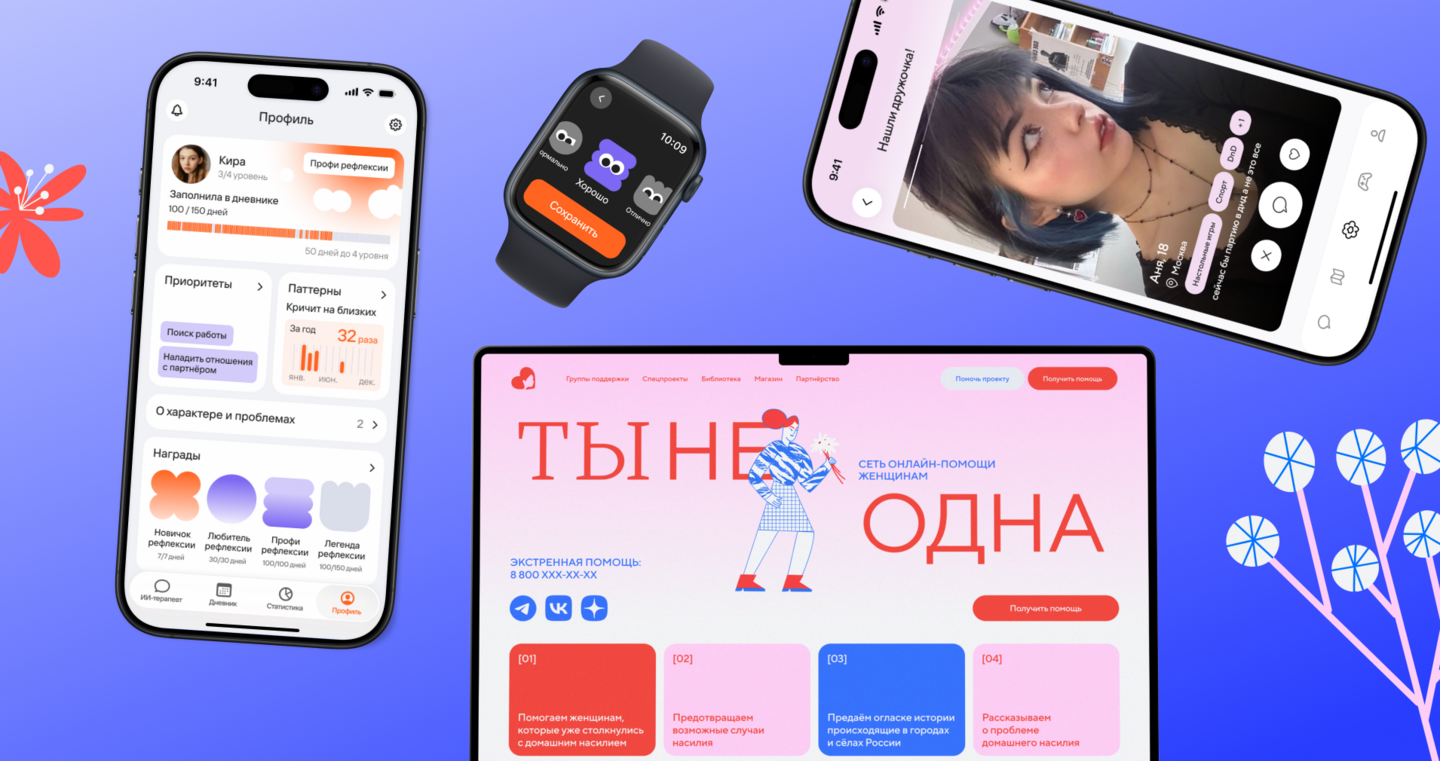

1. Cognita
Cognita is a mental health tracking app that helps users gain a better understanding of their emotional well-being. It allows them to record thoughts and moods, identify recurring behavioral patterns, and explore challenging situations with the assistance of AI.
The goal was to design a mobile application with a clear and intuitive user journey—from onboarding and creating a personality profile to regular self-reflection, emotional analysis, and personalized recommendations.
Key Design Challenges
Throughout this project, I focused on three main objectives:
1. Emotional Tracking: Help users quickly and comfortably capture their emotional state through journaling, text entries, and voice notes. 2. AI-Powered Reflection: Design an experience for exploring difficult situations with an AI therapist and simulating alternative responses. 3. Pattern Recognition: Help users track changes in their emotional well-being and recognize recurring behavioral patterns.
Problems
Difficulty Identifying Patterns: It can be challenging to recognize recurring thoughts, emotions, and behavioral patterns over time.
Emotional Overwhelm: In stressful situations, it can be difficult to organize feelings and understand what to do next.
Lost Insights Between Therapy Sessions: Important thoughts, observations, and insights can be forgotten between sessions with a psychologist.
Need for Gentle Self-Reflection: Users need a supportive way to explore their emotional state without increasing anxiety or self-criticism.
Research
Classroom
- Going Through a Difficult Time When I am navigating a difficult situation and jotting down my thoughts on my phone, I want to gain clarity on my feelings and explore potential ways to respond, helping me reduce anxiety and feel more prepared for similar circumstances in the future.2. Currently in Therapy When significant events occur between therapy sessions, I want a single place to record and organize them so I can better understand my reactions and collaborate more effectively with my therapist.3. People with Specific Mental Health Needs When analyzing and discussing my emotional state through a chat, I want to do so within a gentle and emotionally safe environment—one that allows me to better understand myself and my reactions without escalating anxiety or self-criticism.4. Self-Aware and Reflective Users When reflecting on my experiences and tracking my emotional state in an application, I want to see a comprehensive overview of my feelings over time, enabling me to discern whether I am thriving or approaching burnout.
UX Architecture
User Flows
Three main user flows were designed:1. Daily Journaling & Mood Tracking For users who want to regularly monitor their emotional well-being, a daily journaling and reflection flow was developed. Users can record their thoughts through text or voice notes, track their mood, and explore the factors that influenced their day.2. AI-Powered Situation Analysis For users who need to process a challenging situation, an interactive dialogue with an AI therapist was designed. The experience consists of three stages: describing the situation, reflecting on emotions and reactions, and completing a scenario-based quiz to explore alternative responses to a similar situation.3. Statistics & Personality Map A dedicated flow was designed for exploring emotional statistics and a personalized personality map. It helps users track changes in their emotional well-being, identify recurring behavioral patterns, and receive personalized recommendations.
Final solution
1. Daily Journaling & Mood Tracking
2. AI-Powered Situation Analysis