What would your campaign look like with no limits?
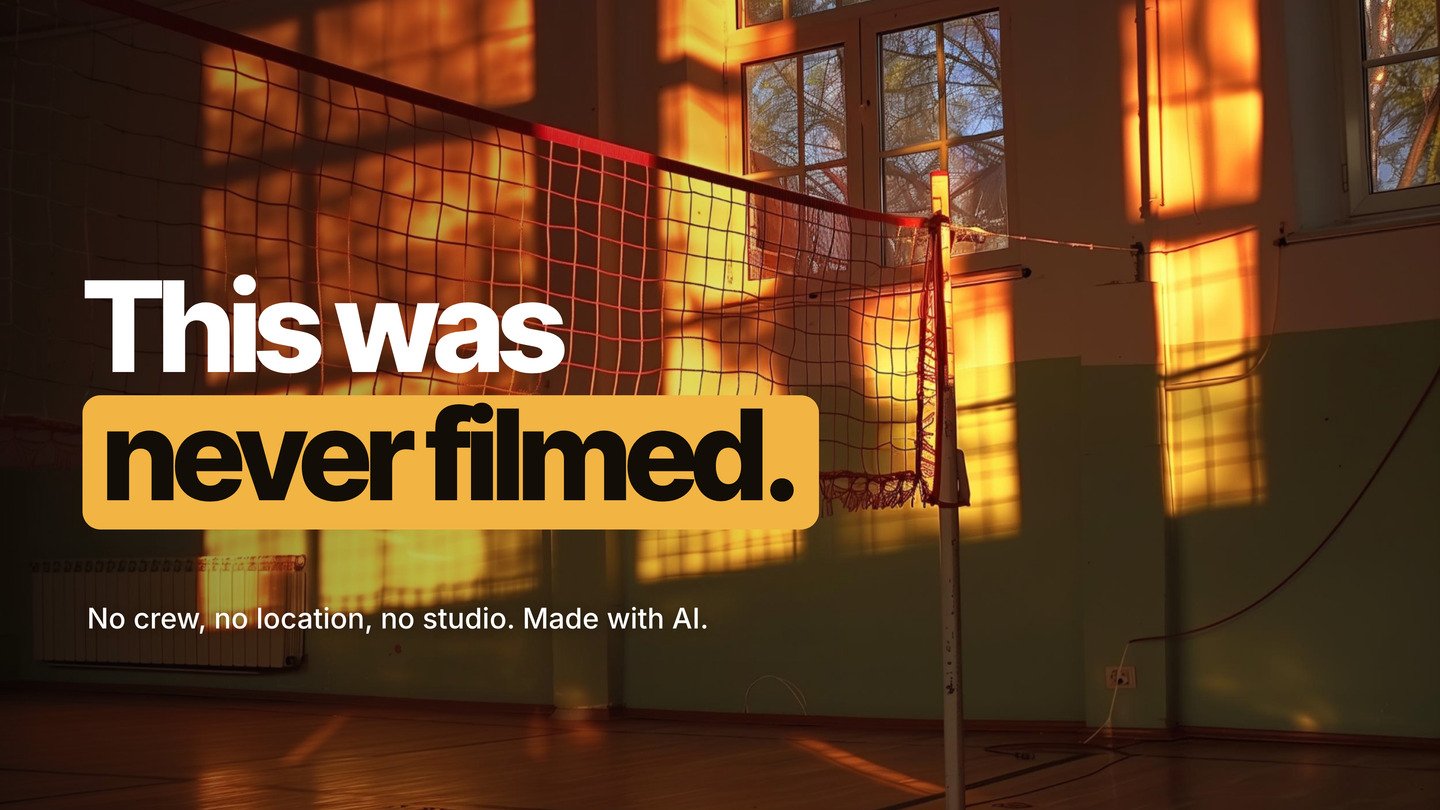
A product in a world that doesn’t exist, a location no crew could reach, light no studio could set. A few years ago, that required a film crew, a location, and a million-dollar budget. Today, a brand can visualize any world it imagines using AI, in just a few days.
But beautiful images are ubiquitous now, and people remember the brands they feel. I’m Vera Ilina, a journalist, designer, and AI artist at the HSE Art and Design School. I transform a brand’s boldest idea into a visual story that resonates with the audience—from research to final images and video.
How I build a story
I plan the structure before I generate a single image. Every project gets one message, a conflict, and a turning point—and only then a visual style. These seven rules keep a story on track, even across ten frames.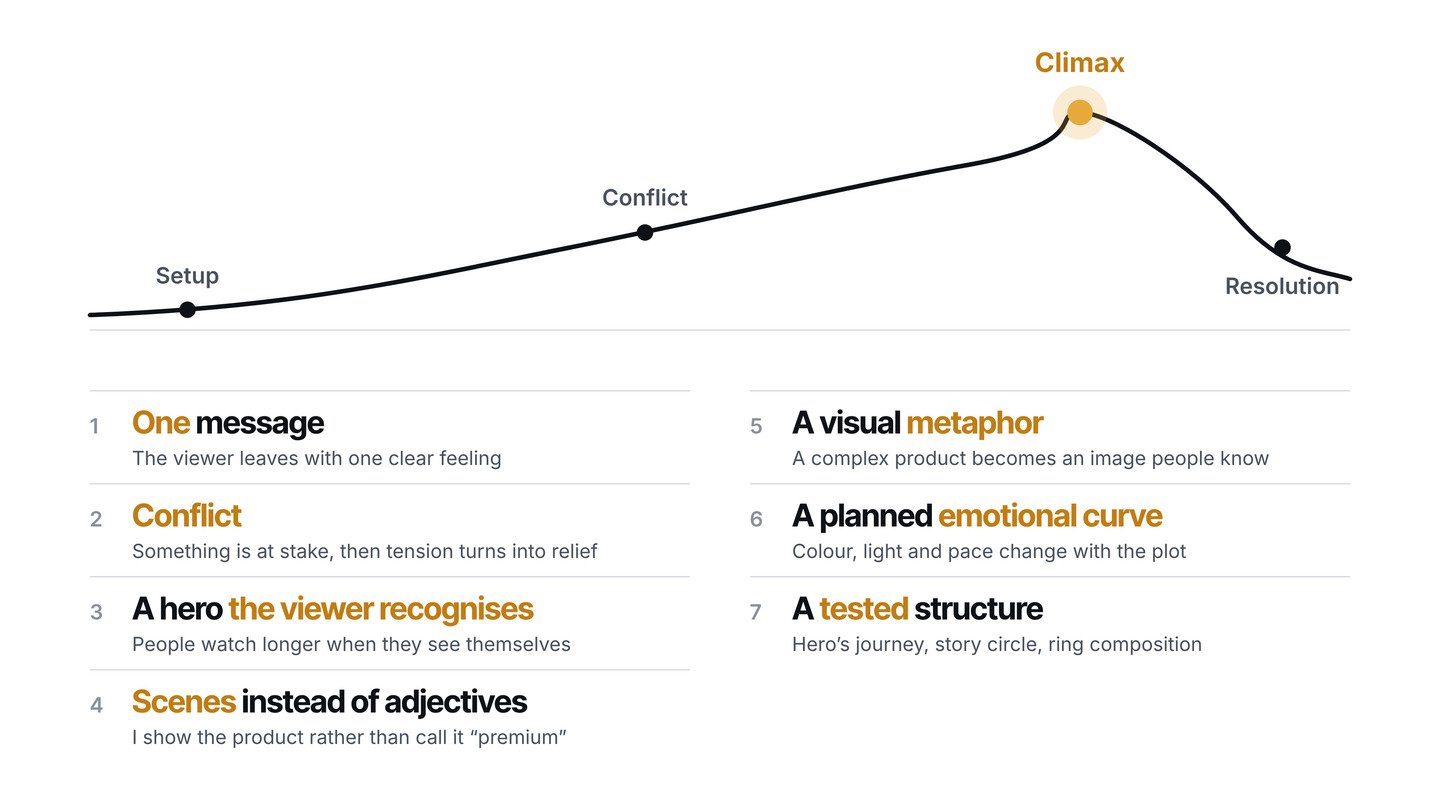
Memory Tesseract
Short AI film. Finalist of HSE CREATIVE OPEN’26 in Visual Storytelling with AI Tools. Midjourney, Kling 3.0.
Task. Some memories are locked away rather than forgotten. The task was to make the viewer feel that state in a short clip: something personal and difficult to discuss.
Idea. Memory becomes a physical object: a 30-centimeter black cube in a sterile white room. Inside, it is vast. Locked feelings reside there as figures that have changed in isolation. The cube cannot be broken. It opens only when the heroine embraces what is inside.
Inside the cube: thirty centimeters across, and a whole world within.
Narrative. The film follows a miniature hero’s journey. The heroine leaves the ordinary world—a white room—and enters the cube. She confronts what she has kept hidden. The turning point arrives when she ceases resistance and embraces it. The ending mirrors the opening: the same white room and the same cube, now splitting open with light.
Solution. I established the visual language before generating any frames: biomechanical bodies, glass walls, and a cool palette of black, deep blue, and white. Warm color appears only twice—in the light spilling from the cracks at the beginning and in the grass at the end—so color carries the emotional arc.
Models. Midjourney generated the world and the frames, and Kling 3.0 converted them into video. Each prompt fixed the scene, the lighting, and the camera position, allowing disparate generations to join into one sequence.
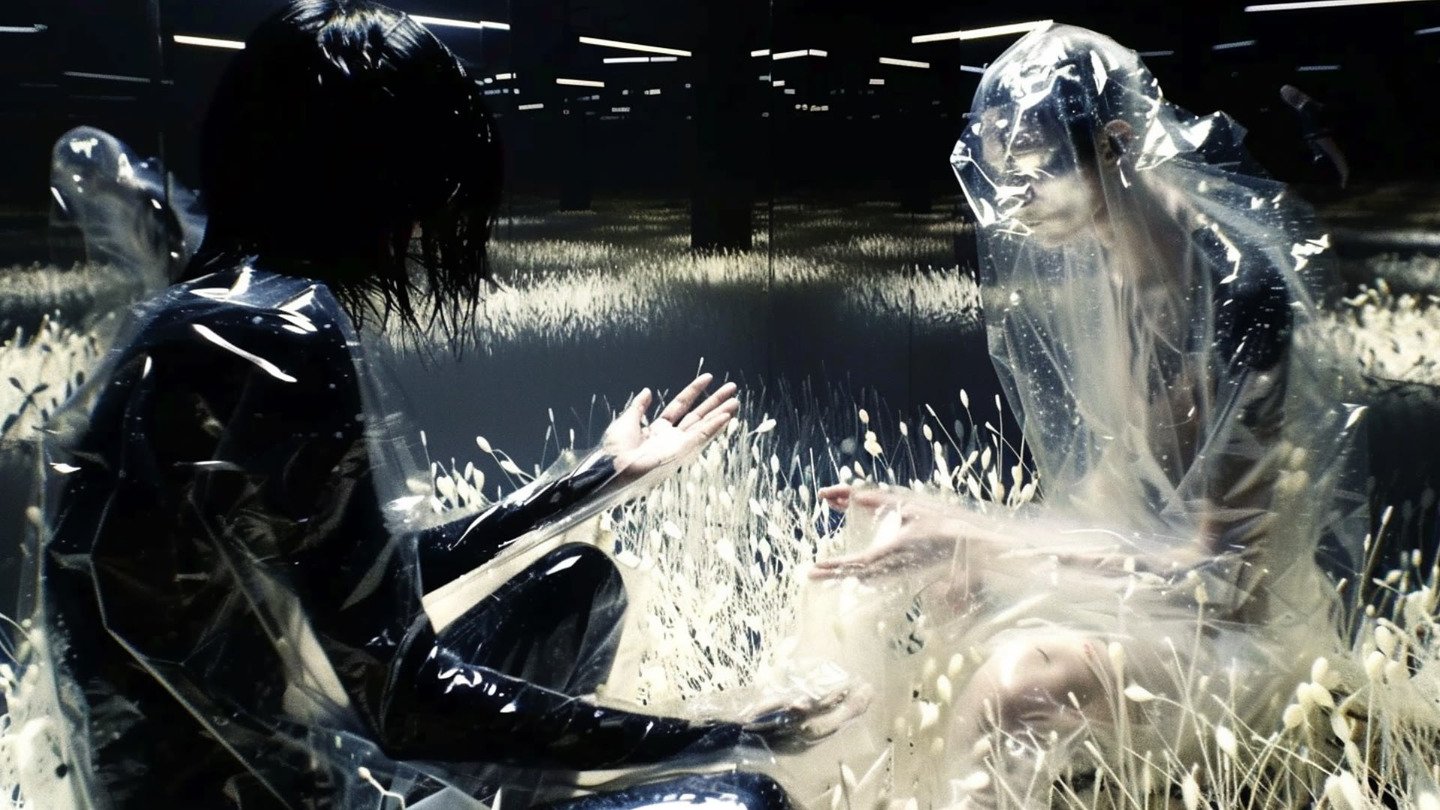
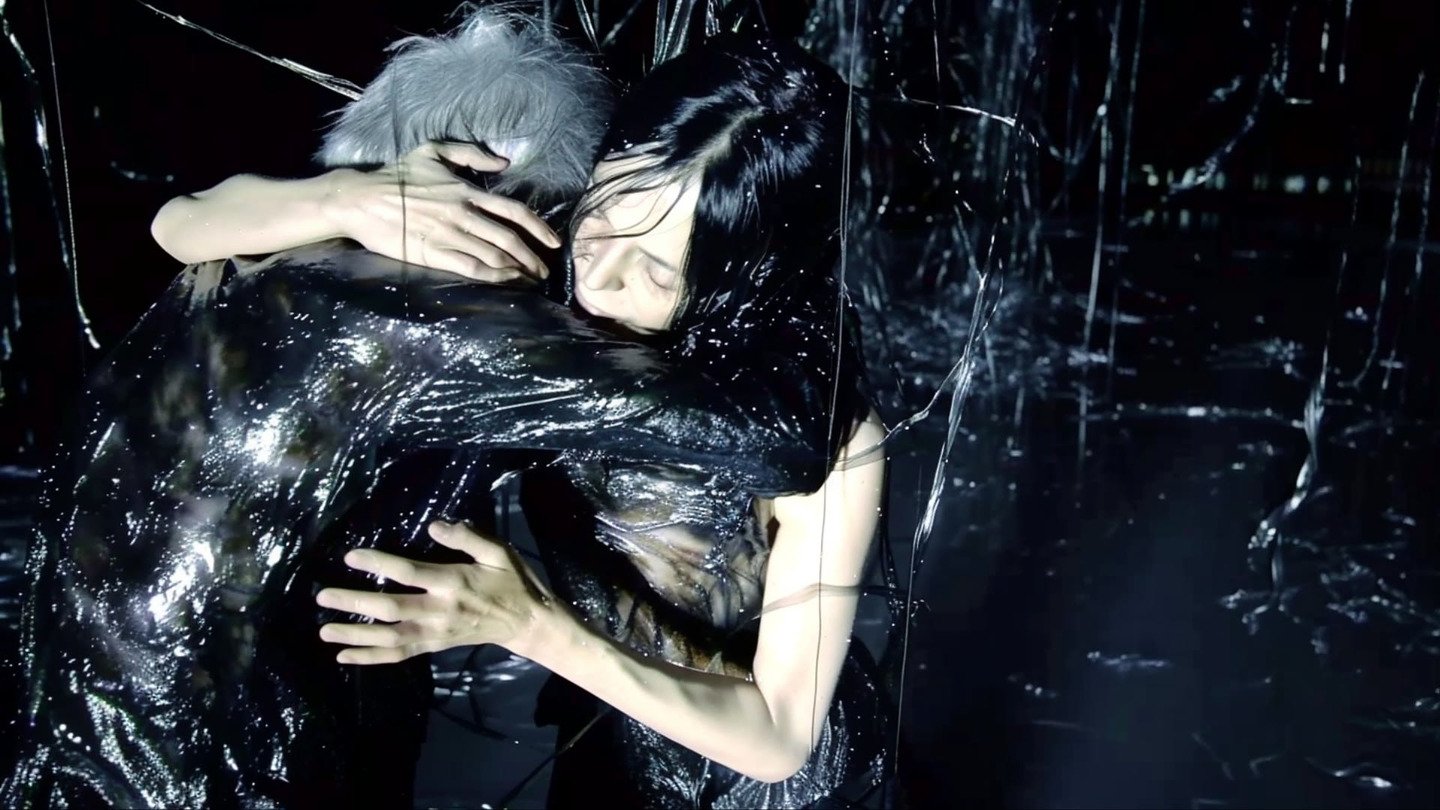
Result. The film reached the final of HSE CREATIVE OPEN’26 in the AI visual storytelling category. The same method applies to a product: distill it down to one core feeling, transform that feeling into a metaphor, and guide the viewer from tension to resolution. The full film is on the project page.
May 31
AI illustration series, 10 images. Midjourney.Task. Turn one shared feeling into a series: *the last day of school*, when the classrooms go quiet and summer is about to begin. Almost everyone remembers this moment, and it is hard to depict.
Idea. *There are no people in the frames*; only the building seen through a student’s eyes. Classrooms and corridors that were noisy just a minute ago stand empty. The void allows the viewer’s own memories to enter.
Narrative. Nothing happens in the frames—and that is the plot: waiting for what comes next. The camera takes the student’s point of view, so every viewer steps into that role. The low evening sun tells the time: the end of the day and the school year.
Solution. One visual system runs through all ten frames: light-green walls, a low orange sun, bright spring greenery outside, and three-quarter angles devoid of symmetry.
The final bell has rung. The studios are still warm.
Models. One prompt formula in Midjourney with a fixed 3:2 frame. It functions as a visual bible, allowing new images to adhere to it at any time.
Result. A series exploring anticipation within a warm, light color palette. For a brand, this demonstrates how to evoke shared memory without placing a product in the frame—which is the essence of a nostalgia campaign.
Aura
Concept rebrand of a spa center for the Prompt Branding competition. Midjourney, Ideogram.
Task. Rebrand a spa center that utilizes chakras and color therapy. The identity needed to convey a sense of being calm and premium while explaining a unique offering: each treatment is selected by color, depending on the guest’s needs.
Idea. Since the treatments are already categorized by color, the palette became the brand. The identity is built around six warm shades, ranging from peach to plum—the colors of the aura.
Narrative. The brand story follows the guest. They choose a color for their request, and that same color meets them at every step, from the business card to the towels and the treatment room.
Solution. I built the system piece by piece using AI: the color palette, the logo, the stationery, the business cards, the towels, a T-shirt, a shopper, posters, and the interior design. After generating the logo, I identified its typeface so the name could be set in real layouts.
Models. Midjourney for the palette, logo, mock-ups, and interiors. Ideogram for posters with typography.
Result. A complete brand identity—from a business card to the physical space itself. For a brand, this showcases the entire journey from initial concept to daily touchpoints, all stress-tested with AI before production begins.
Why a Visual Story Sells
A campaign earns revenue when people notice it, remember it, and subsequently choose the brand. Emotion drives all three, and a story is the most reliable way to purposefully evoke emotion. For a business, a visual narrative performs four practical functions.Attention. In a feed saturated with similar AI imagery, a frame posing a question compels viewers to pause. Memory Tesseract opens on an enigmatic black cube, prompting the viewer to wonder what lies within. Memory. Viewers rarely recall technical specifications, but they remember how an advertisement made them feel. May 31 features no product, yet almost everyone recognizes the last day of school. Value. A story imbues a product with greater perceived worth, allowing the brand to compete on meaning rather than price. Scale. A single concept and one cohesive visual system power the entire campaign—from the key visual and video to social posts and packaging. In Aura, six colors extend seamlessly from the business card to the interior design.How a Project Runs
I manage all five stages personally, ensuring a seamless workflow between the copywriter, art director, and production team. Research and narrative development typically take about a week. You’ll see a story concept and key frames before production begins. Production itself lasts one to two weeks, depending on the final format.
Models I Work With
I select the appropriate model for each task. In a separate project, I fine-tuned Stable Diffusion XL on Tiepolo’s frescoes. This same methodology can ensure a brand’s style remains consistent across an entire campaign.