I am a 3D Artist and Environment Artist.
I create characters, props, and environments that transform familiar settings into distinctive game worlds. From a grandfather’s puzzle-filled home to a park viewed through a pigeon’s eyes, I am interested in the details that lend a game its unique personality.
Looking for indie game collaborators
About Me
Building worlds through their details. I’m a 3D artist with an interest in stylized environments, expressive props, and visual storytelling. What draws me to game art is the relationship between an object and the person who uses it. A pair of glasses can suggest a daily routine. A worn table can reveal a favorite hobby. A monument can become the center of an unexpected confrontation. My focus is on creating visuals that support the game’s mood while keeping its spaces and objects easy to understand. I’m looking to collaborate with developers and game designers who want to build small, distinctive games with a clear visual identity.
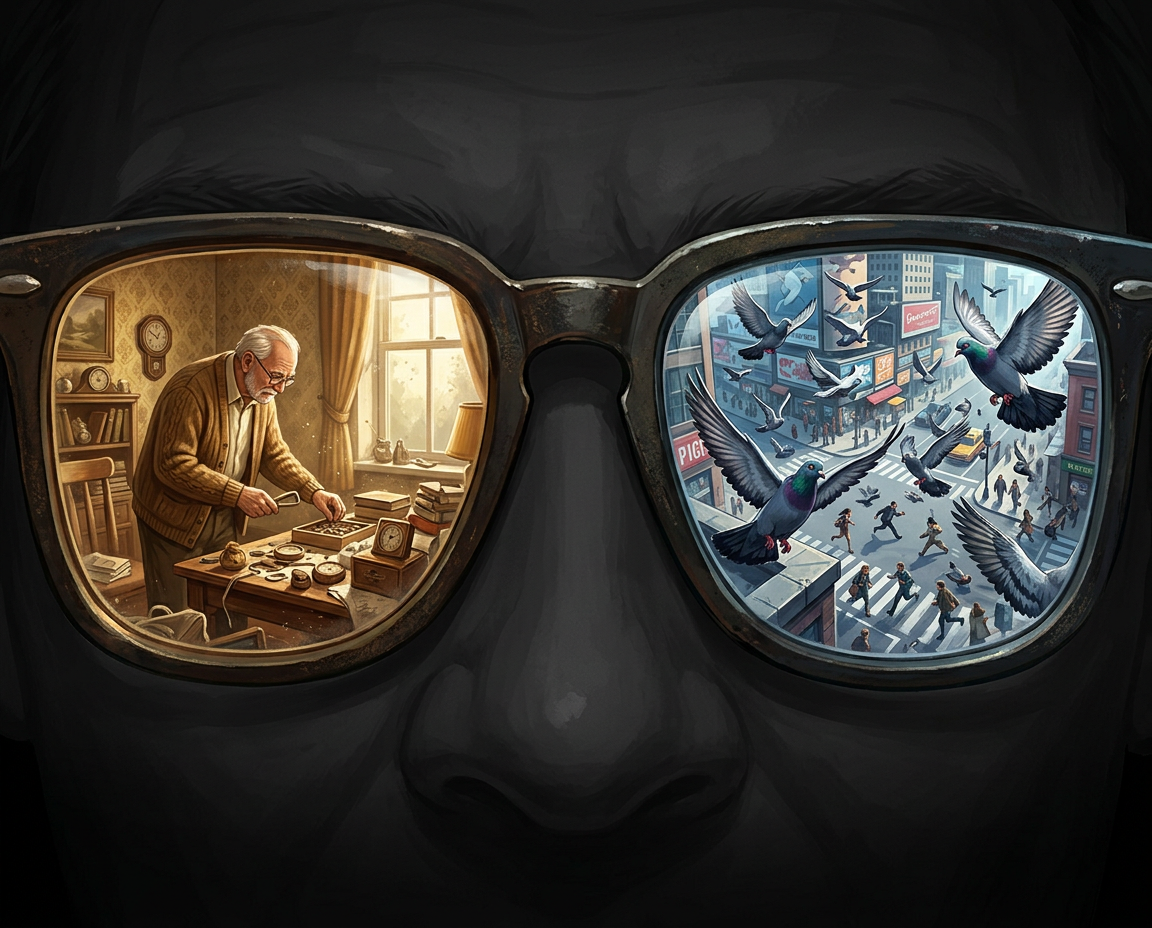
Grandpa’s Glasses
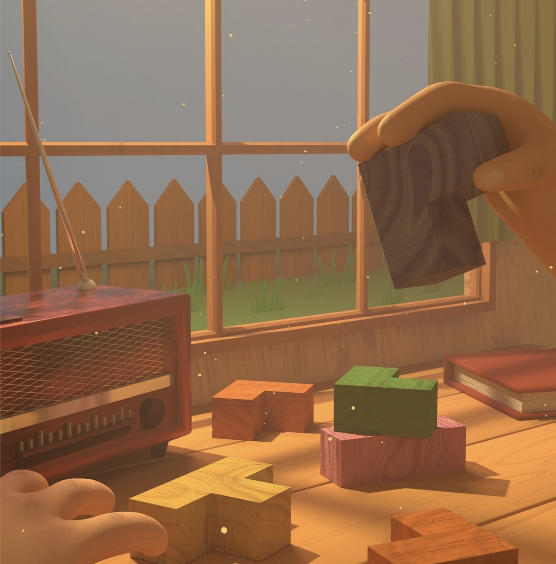
A quiet home
A different way to see it
First-person 3D puzzle game Grandpa’s Glasses invites players into the life of a grandfather returning to his old hobby: assembling puzzles. Switch glasses, solve puzzles, and explore the atmosphere of a carefree retirement. My role: 3D Artist & Environment Artist Proposed project stage: Art prototype—first playable room in development.
The Challenge
How can a room feel personal without becoming visually overwhelming? For a first-person puzzle game, the environment needs to do two things at once: establish a believable atmosphere and help players recognize what matters. The artistic challenge was to create a comfortable, lived-in space while keeping puzzle objects and interactive props visually distinct.
The idea
Tell the grandfather’s story through the objects around him. Rather than treating the room as a neutral backdrop, I approached it as a collection of small clues about its owner. Glasses, puzzle boxes, furniture, and everyday belongings help suggest his routines and interests. Warm colors and simplified shapes support the relaxed tone.
My Contribution
My work focused on the room and its key props, from early visual exploration to assets prepared for an engine test. Visual Development I developed a reference board and explored a stylized direction for the interior, focusing on warm materials, readable silhouettes, and a consistent level of detail. 3D Environment and Prop Modeling I worked on the main furniture and smaller objects: a table, an armchair, shelving, puzzle boxes, and decorative props. Eyewear Design I explored different frame shapes so that each pair would have a recognizable silhouette, even when viewed at a small scale. Asset Preparation My tasks included UV unwrapping, texturing, and preparing assets for import into the game engine. Scene Composition I used a room blockout to test scale, object placement, and the relationship between the player’s viewpoint and the puzzle area.
Current outcome
A visual foundation for the first playable space. At this stage, the focus is on establishing the room’s style and testing its key assets together rather than producing a large amount of content. The next step is to review the scene in-engine with a developer, check how clearly interactive objects stand out, and refine the assets around the puzzle mechanics.
Pigeons Strike Back!
A small flock
A very important monument
2D game set in a local park Play as a pigeon leading a small flock on an ambitious mission: capture a monument guarded by pensioners. An ordinary public park becomes the setting for a humorous struggle over territory. My role: Visual Development & Environment Artist Proposed project stage: Pre-production — visual direction and prototype assets
The challenge
How can a familiar park transform into a readable and memorable game space? The player must quickly recognize the flock, the monument, and the opposing characters. Simultaneously, the setting should feel like a real place rather than a collection of unrelated obstacles. The challenge was balancing environmental character with clear gameplay priorities.
The idea
See an ordinary place from an unusual point of view. For the pigeons, the park is more than just scenery. It is their territory, and the monument is its most desirable landmark. The visual direction builds on this contrast: a recognizable everyday setting becomes the stage for a mission that feels much bigger to its feathered participants.
My contribution
For this project, I focused on environmental concepts and the visual preparation of the park. Environment Exploration I developed sketches of the central play area, exploring how paths, benches, greenery, and the monument could form a coherent scene. Landmark Design I explored the monument’s shape and proportions to establish it as a clear focal point. 3D Blockout Support I used simple 3D forms to test spatial relationships and perspective before developing the environment artwork. Prop Design I created concepts for park elements—such as benches, bins, signs, and paving—ensuring their shapes aligned with the overall style. Color and Readability Studies I explored methods to distinguish characters from the background and prevent decorative elements from competing with essential gameplay information.
Current Outcome
A visual direction ready to be tested through a prototype. The current focus is on establishing the park’s layout, its central landmark, and a consistent approach to environmental details. The next step is to test these choices alongside movement and flock behavior, then adjust the artwork to support what the player actually needs to see.