Alina Ilchegulova — Game Design & Programming
Game worlds, player goals and gameplay systems for small teams
Game designer with programming skills
I help small game teams translate fictional worlds and player objectives into playable experiences. I merge game design with programming, connecting worldbuilding, scenarios, and levels to the underlying player systems.
These four projects showcase my work across different scales: a 3D shooter, a platformer, a tabletop RPG, and my graduation game concept. I am currently seeking collaborators for game design and gameplay implementation.
Isle of Dreams: Beetle Battle
First-person 3D shooter · Team project
My role: game design, level design, and gameplay systems
A magical garden transforms into a battlefield when pests invade the player’s town. The player advances toward a confrontation with the Slug King.
Design challenge: to seamlessly connect player movement abilities with the spatial environments and encounters where those abilities are employed.
Movement shapes the route
Approach: I focused on the tutorial, the main level, the arena, and the encounters surrounding dashing, super jumping, and rocket jumping. These abilities provide various ways to traverse the garden, evade hazards, and reach challenging areas.
My contribution also included pickups, checkpoints, health systems, and respawn mechanics, alongside supporting work on the interfaces, menus, sound, and particle effects.
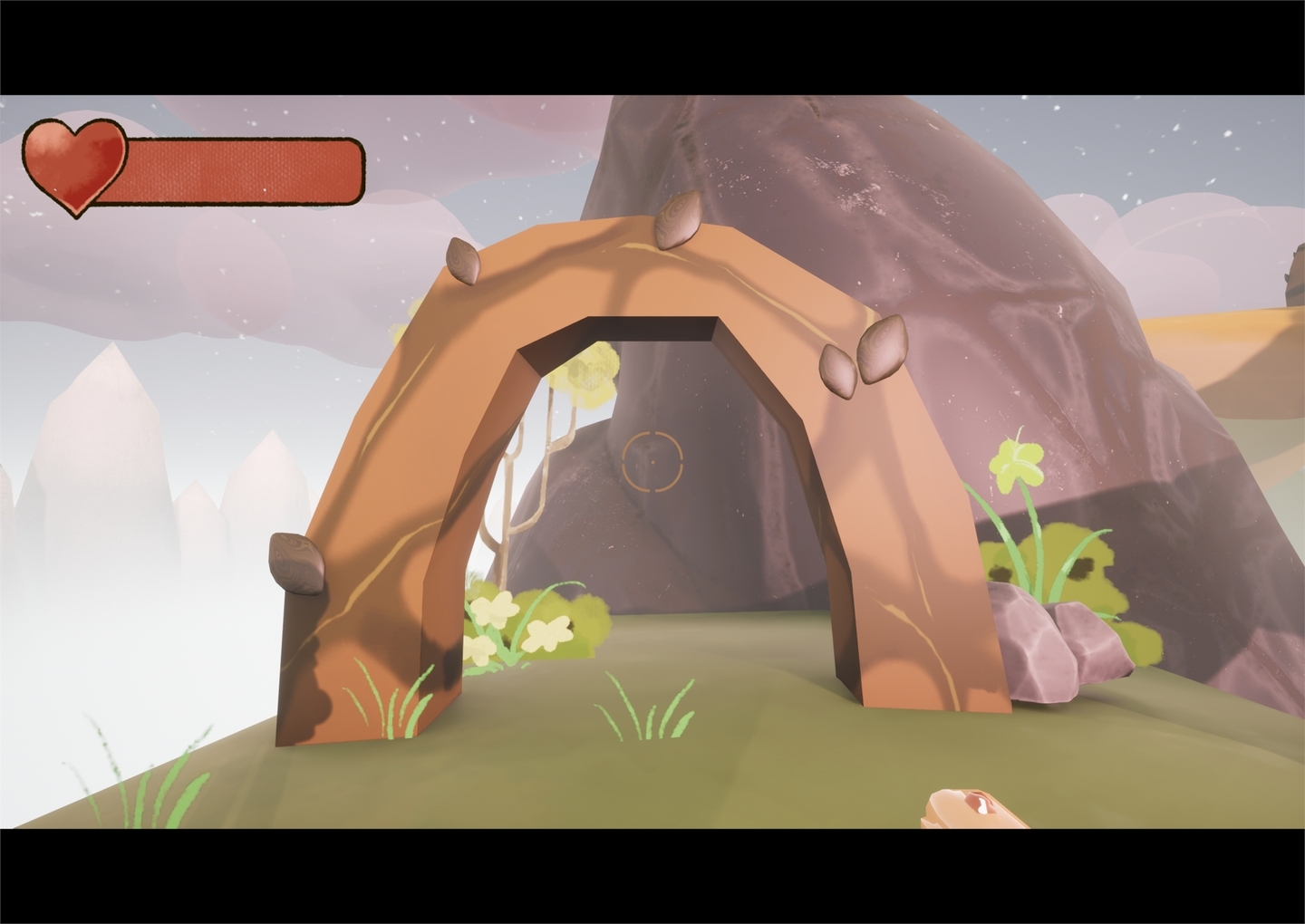
Outcome: My contribution to the team game spanned movement mechanics, level design, and supporting gameplay systems. The screenshot below displays the shared in-game environment.
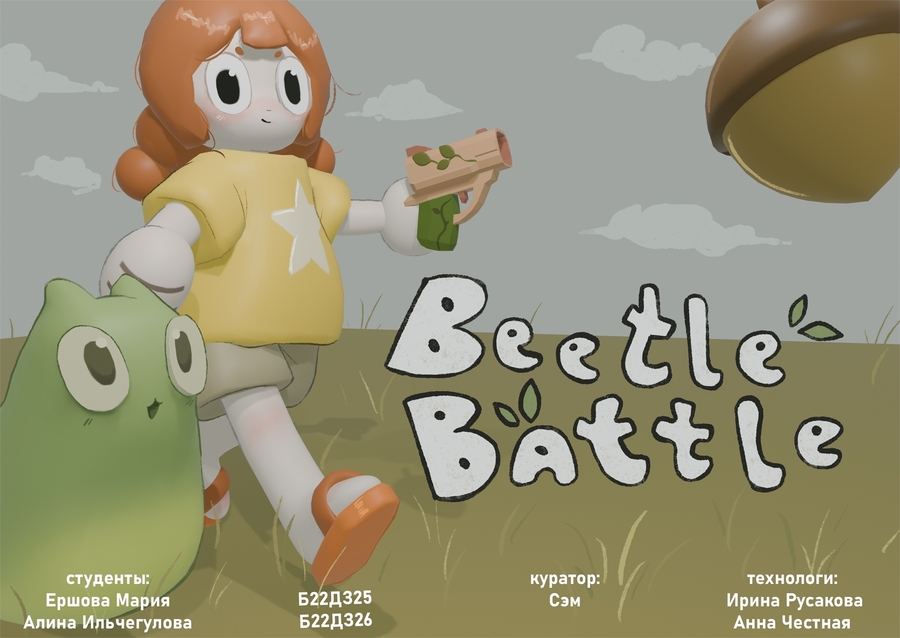
Level design document: the route spirals through the islands as the player gains abilities before reaching the boss. Original team presentation in Russian.
Merlin in Mexico
Adventure platformer · Team project
My role: gameplay programming
Merlin travels to Mexico in search of immortality, even if it means entering the world of the dead.
Implementation challenge: translating the team’s movement and ability design into character behavior, camera response, and supporting game systems.
Double Jump and Glide
Approach: I implemented the airborne jump and gliding behavior. Holding the jump key slows the descent, subtly pulls the camera back, and grants the player greater control over the landing trajectory.
Jump again → Hold to glide → Steer the landing
This connects three elements of traversal: player input, character motion, and camera behavior.
Outcome: programming across the game
My implementation work extended to platforms, abilities, scripted events, menus, and saving, in addition to sound and visual effect integration.
Merlin is my broader programming case study: these systems support the team’s platformer from movement through to progression. The playable build is linked at the end of this portfolio.
Merlin in Mexico — double jump and gliding in the team game.
The Path to Paradise
Tabletop role-playing game · Team project My role: worldbuilding, narrative, and scenario design
Former gods, exiled from heaven, seek to reclaim their place in a late-medieval world.
Design challenge: turn the setting and the characters’ lost status into compelling reasons for players to act.
I developed the lore, locations, player identities, world logic, goals, and several playable stories. My teammate developed the card mechanics.
Lore becomes a player objective
Approach: In one scenario, a cult uncovers divine secrets and attempts to resurrect an ancient god. Stopping this ritual allows the exiled gods a path to gain heaven’s approval.
Lost divine status → Seek approval → Investigate the cult → Stop the resurrection
Outcome: This scenario links a specific conflict to the characters’ overarching ambition. The lore serves both as a catalyst for action and a guiding principle for gameplay. This is a narrative-design example from the team project.
The Garden Grows on Its Own
Graduation Project · Concept Development My work: game concept, visual research, and sketches
A world small enough to fit on a table, yet too large to comprehend from the outside.
A mountain garden exists both as a first-person environment and as a miniature displayed in a gallery. Modifications to the model reshape the internal routes.
Design challenge: transforming the same landscape into a navigable space and an object the player can alter.
One garden, two scales
Approach: the player explores the garden, finds a blocked path, and then returns to the miniature to alter it.
Explore → find an obstacle → change the model → return
In a planned interaction, a splinter placed across the miniature’s ditch becomes a bridge within the garden. Other proposed interactions use light and wind to reveal paths.
A familiar landscape made strange
Exaggerated moss, rounded hills, clear water, and deliberately constructed architecture define the visual direction. Cool greens, blue shadows, and shifting light create the feeling of a private discovery.
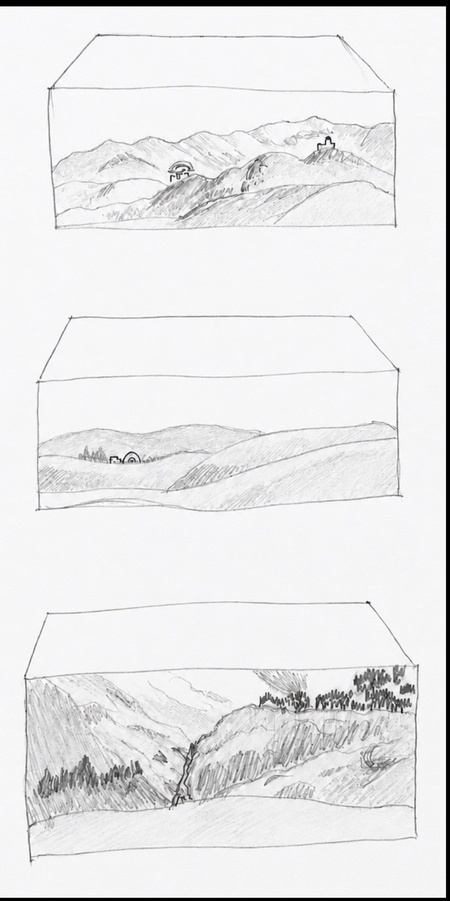
My pencil studies below explore the gallery and the miniature as two views of the same world.
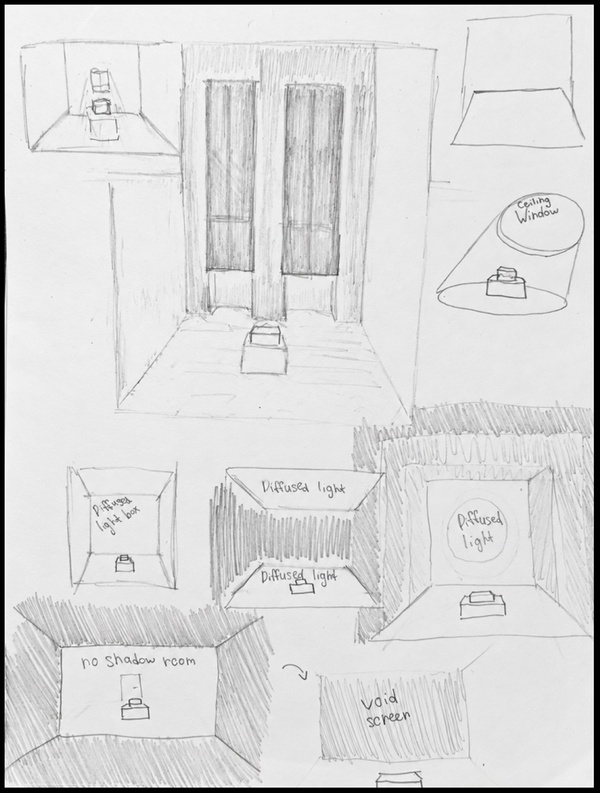
Outcome: a concept ready for a focused prototype
The current work includes the setting, proposed interaction loop, visual research, and my original sketches. These are concept-stage materials.
Next step: prototype one blocked route, one change to the miniature and its effect inside the garden. This will test the central interaction before the world expands.
Let’s make a game together
I can contribute to worldbuilding, scenario design, and level design, alongside programming work on gameplay systems.
If you are building a game and looking for a collaborator, email me with a short description of the project and the role you have in mind.
alina.ilchegulova@gmail.com