This research will form the foundation for developing the brand collection.
Theme 1: Utilitarian Stationery Codes in the Soviet Institutions System (1960s–1990s)
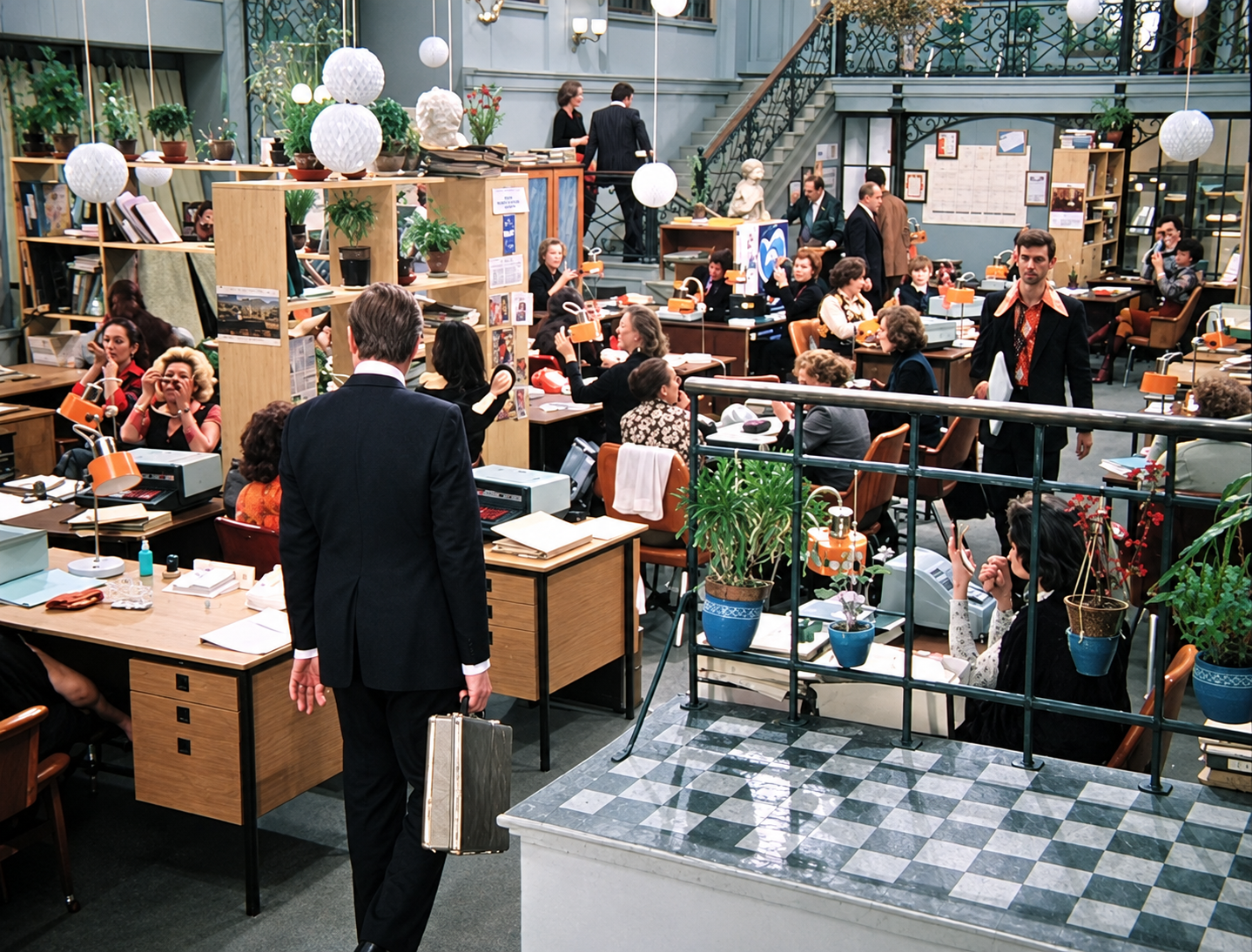
The topic examines the material environment of a Soviet institution—files, seals, stamps, furniture, lighting—as a visual code that shaped behavior, documented hierarchy, and depersonalized individuals, transforming them into functional components of an administrative mechanism.
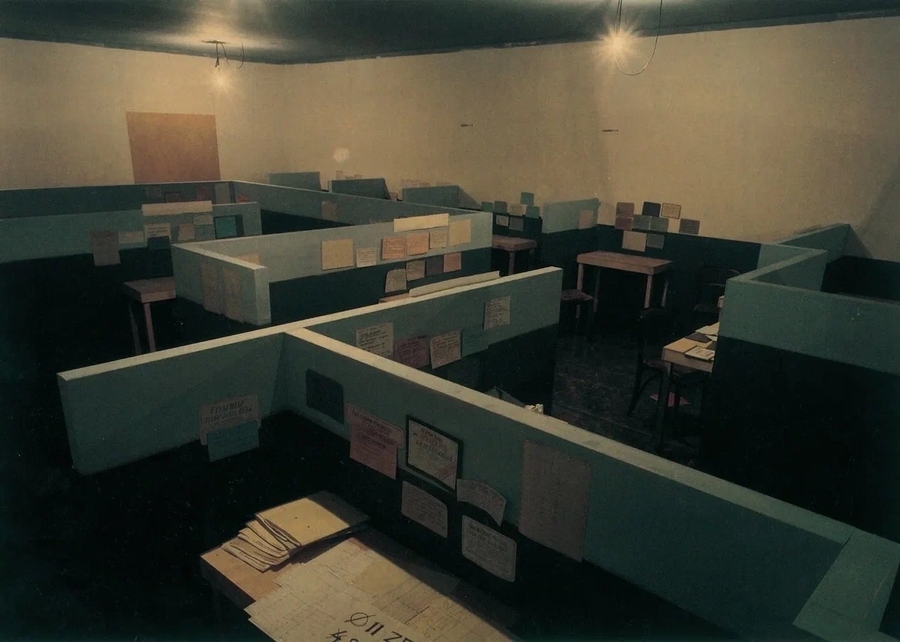
«Big Archive» Ilya and Emilia Kabakov 1993
Object of Analysis:
Space—as a collection of material symbols. Here, the individual is viewed not as a person, but as a functional element of an administrative mechanism, whose behavior is programmed by the very arrangement of objects. It is important to understand: the Soviet institution is not merely a workplace. It is a machine that produces documents while simultaneously manufacturing the «specialized human”—disciplined, interchangeable, and accustomed to reading the world through folders, stamps, and instructions.
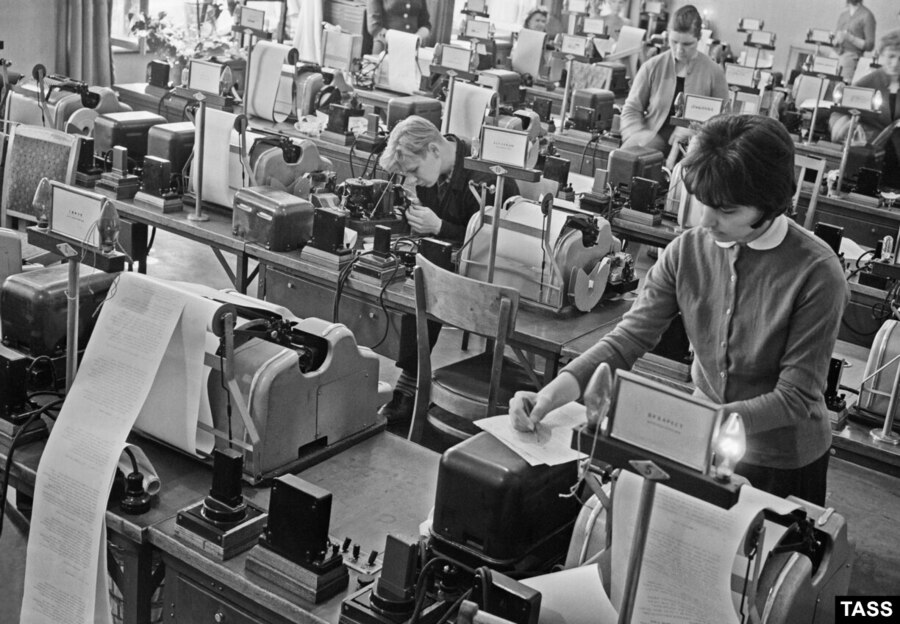
TASS Telegraph Hall, 1993
Area of Interest:
Files, binders, stamps, instructional guides, office furniture, and lighting—the utilitarian visual code of a Soviet institution. Each of these items appears neutral. But together, they form an environment where the object is more important than the person. The binder doesn’t just store papers—it determines which papers exist and which disappear. The stamp doesn’t just leave an imprint—it transforms a sheet into a document, and a person into an applicant. The desk with a cabinet isn’t just convenient—it fixes the hierarchy: who has a cabinet, who has just a desk, who has a desk in an office, and who has one in a communal room. Particular interest is drawn to the nomenclature of signs—a consistent set of visual markers that were instantly readable: the color of the folder, the shape of the stamp, the type of paper, even the style of the lamp above the desk. These signs were not mere decoration. They were the language of power, spoken without a single word.
Ilya Kabakov, «Ten Characters, ” 1988
Research Plan:
- Historical Context: bureaucratic visual culture, planned economy, office furniture competitions of 1958–1963.
- In Photography: Boris Savelyev and Alexander Titarenko.
- In Interior Design and Architecture: 1960s office furniture, standardized buildings.
- In Art: Zhanna Kadyrova, «Wall of Honor.»
- In Design and Material Culture: «unfashionable merch.»
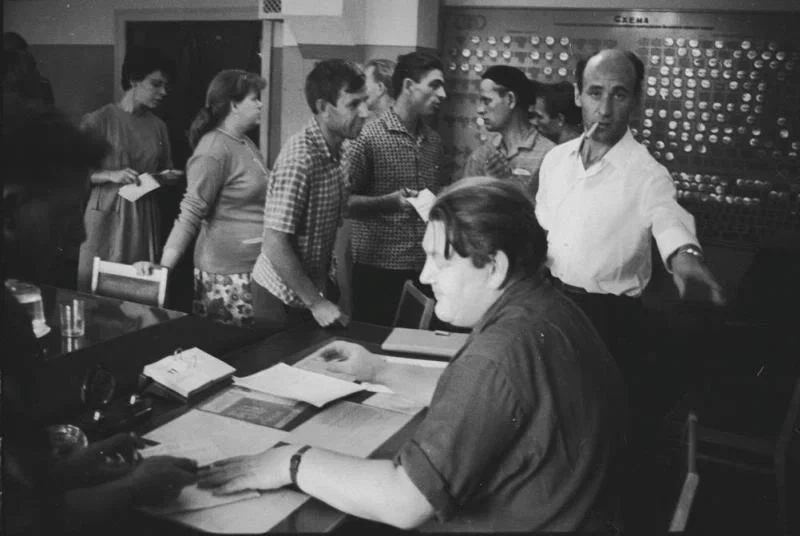
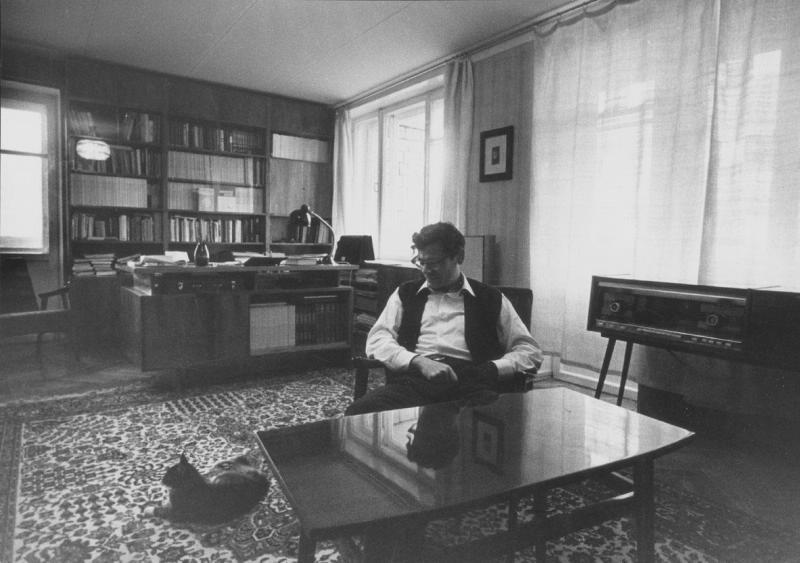
«In the Office» by Svyovolod Tarasevich, 1970