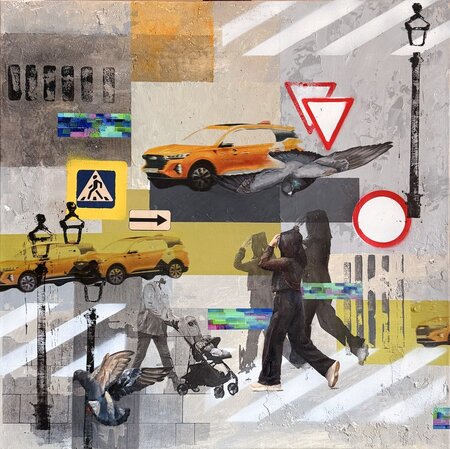
Portfolio 2026
Mariia Agafonova | Animator, Illustrator
Cover Design Objective: Quickly establish the theme, angle, and expectation.
Formulate the topic so that the subject matter and its relevance to the audience are clear from the very first screen.
Use phrasing centered around a challenge, a problem, or an expected outcome—this helps capture attention more quickly.
Imagine the viewer sees only this slide: they should be able to correctly guess the entire presentation’s meaning.
01.
Projects
Zel’ye-Varen’ye
Describe the problem through observable manifestations and real-world consequences, not through general statements.
Show the situation from the audience’s perspective: where it occurs, who it inconveniences, and what it leads to.
The more precise the diagnosis—the higher the trust in the subsequent solution.









Step 3. Solution
Представьте подход, метод или продукт
Articulate your solution simply and precisely: what exactly are you proposing and what problem does it solve.
First, present the overarching concept, and then—if necessary—elaborate on the architecture and operational logic.
Keep the focus on the essence—details can be deferred to supplementary slides.








Step 4. Defense
Подтвердите состоятельность решения
Support key statements with facts, examples, and measurable results.
Use case studies, data, demonstrations, and practical breakdowns—these reduce skepticism and make the solution verifiable.
If the audience might have a question or doubt—it is better to address it here in advance.









Step 5. Action
Переведите понимание в решение
Formulate a clear next step for the audience: what exactly are they being asked to do after the presentation?
Specify the format, stages, or prerequisites if they influence the decision.
A strong call-to-action slide eliminates ambiguity and converts interest into commitment.









Step 6. Finale
Зафиксируйте главный смысл и оставить сильное послевкусие
Distill the core message of the entire presentation into a concise and memorable statement.
You can return to the initial problem and show the new state after implementing the solution.
The final screen must retain the central theme and direction—even if the audience only remembers that.