
// Small Forms Festival.
Zvenigorod, August 2027.
The «Pole» Foundation, Continuation of Theatre in the Field //

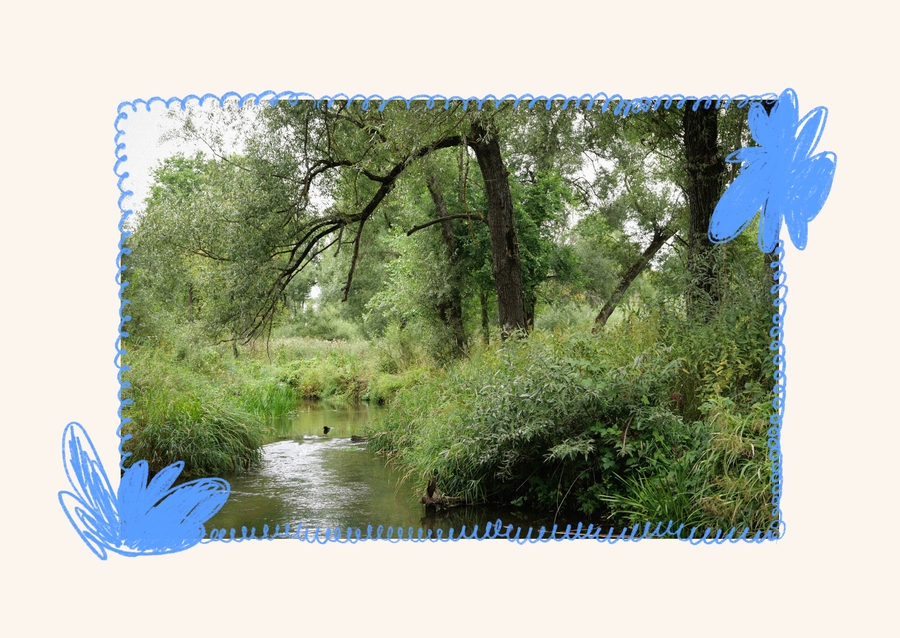
ZVENIGOROD — one of the oldest cities in the Moscow region, which today preserves remarkable nature, federal-level architectural monuments, and, most importantly, the intimate atmosphere of a small-town hub.
Since the 19th century, this has been a summer retreat for Muscovites. Dunino became a dacha destination starting in the late 19th century. Chekhov visited here in the summer of 1884 as a district doctor. In the same year, 1884, Levitan and Korovin wrote in the Savvinskaya settlement.
Mikhail Prishvin, Dunino.
He lived in Dunino from 1946–1954 and essentially commuted: spending the winter in Moscow and from April to the end of October in the village. His entire life he dreamed of «his own arranged nest.»
Anton Chekhov, Zvenigorod.
In the summer of 1884, he was a local physician in Zvenigorod.
Maria Yakunchikova, Vvedenskoye.
She wrote about the homeland from Paris. Her swan graced the cover of Mir iskusstva for eight consecutive issues.
Sergey Taneev, Dyutkovo.
He lived in Dyutkovo starting in 1906; he was a leading theorist of polyphony. In the spring of 1915, his student Scriabin died; Taneev became ill but went to his beloved Dyutkovo in May, where he passed away in June.
• What unites all the small formats is this: each one becomes a stopover for a migratory bird, a place where a guest receives something and leaves something behind.
• The festival guests are migratory, too: they arrive from their cities for a month, just as Muscovites did since Chekhov’s time.
• The story is this: it’s one summer lived like a bird—to arrive, settle in, mend your wing, leave a mark, and fly away.
We don’t have four portraits of four geniuses; rather, we have four guests just as migratory. The visitors follow the tracks of these four geniuses, like breadcrumbs left by those who flew this route before us.
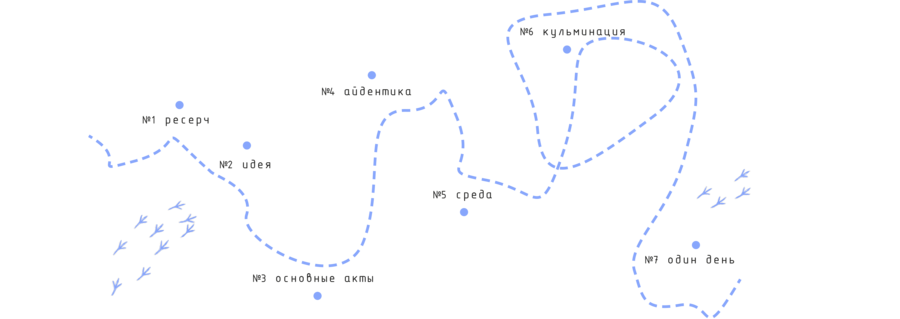
August 2027. Moscow is weary, and guests, as they do every summer for the past 140 years, fly to Zvenigorod.
The first weekend, they build their nest.
In Dunin, they learn to observe, not to take, earning their pilot’s license
and their first flight log entry.
The second weekend, they tend to them.
In Chekhov, they are treated for fatigue—a funny yet delicate process—and they hear the story of a wounded snipe from which «The Seagull» emerged.
The third weekend leaves its mark.
In Vvedensky, they embroider a shared ribbon, each person contributing a stitch, and write about the home that is best seen from afar.
On the fourth weekend, they depart.
In Dyutkovo, they learn to sing a canon where each voice follows the trail of another. On Sunday at sunset near Gorodok, one hundred people fall silent, sing, and hear the bell.
Those who complete the entire journey receive a bread basket (all the breadcrumbs have finally been found), a seat at a private dinner, and a promise: the birds return every year.
Who is the guest and why should they buy a ticket?
The Guest is temporary. In the booklet, they write their call sign (a short name for the summer, like on a radio).
Guests come in flocks. A flock is a walking group of up to 30 people. Breaks are held every 20 to 100 minutes.
Three ticket options. «The Seagull» — one day (four breaks). «The Lark» — the weekend, one full act. «The Swan» — all four acts, the finale, and a private dinner.
The festival runs for four consecutive weekends: August 7–8, 14–15, 21–22, and 28–29, 2027.
Each weekend presents one act. This act features about seven vignettes (small forms), and each one draws between 20 and 100 attendees. Guests can choose the pieces that resonate with them, but every act includes all four types of vignettes.
These four types will later become the four parts of the stamp-trace. Therefore, each pause in every act is mandatory.
Act 1. «Sewing»
The key image. Prishvin, who spent his whole life yearning for his arranged nest. Here, he spent his final years, calling these places his «sun pantry.»
Breaks.
[0] Check-in. Saturday morning. The guest receives a logbook, enters a call sign, marks the first entry «Arrival,» and is served tea.
[Activity] «Morning Pocket.» A walking reading session along the trail: diary entries are read in the places where they were originally written. Led by museum staff and an actor. Two groups of 30 people, 75 minutes each.
[Workshop] «Dear Diary.» A diary workshop: writing five lines about the day in pencil.
[Talk] «A Nest on Wheels.» A lecture-story about the caravan home and the house in Dunin: why the nest didn’t work in one place and succeeded in another.
[Hands] «Breakfast in the Garden.» Produce from local farmers, tea from the samovar. You can join the «Samovar Before Dawn» at 5:30 AM, where the household keepers serve tea and share how the writer’s day began.
[Voice] «Farewell to the Sun.» Sunset by the shore in silence (the birds fall quiet at this hour), followed by singing.
Gift of the Act. A stub of a pencil (a shortened pencil marked «Dunino»). The guest writes with it all month.
Trail. Crane