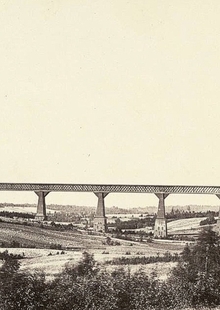
The Komsomolsky Bridge is the second railway bridge crossing the Ob River in Novosibirsk. The bridge was constructed as part of the development of Novosibirsk’s transport bypass. The structure has become a crucial component of Siberia’s railway infrastructure, providing additional transportation links and facilitating freight movement between industrial regions.
The project focuses on studying the truss structure of the bridge and the principles used to ensure its stability. Based on an analysis of the structure’s geometry, a large-scale model was created to demonstrate the relationship between the load-bearing elements, the function of the triangular bracing, and the spatial rigidity of the design.
HISTORICAL OVERVIEW
Komsomolsky Bridge—the second railway bridge over the Ob River, built during the first Five-Year Plan as part of the expansion of Novosibirsk’s transportation system. Its construction was necessitated by the need to establish an additional railway link between Kuzbass and the Urals and to alleviate the load on the Trans-Siberian Railway. Work began in 1930 and proceeded under challenging climatic conditions. The construction was designated a major Komsomol construction project. Thousands of young laborers worked around the clock in three shifts, enduring severe frosts and technical difficulties. The first train crossed the bridge on October 17, 1931, and temporary traffic opened on January 7, 1932. Due to the high pace of construction, the structure was initially named after the Communist International of Youth, but it became historically known as Komsomolsky Bridge. The bridge’s structure incorporates metal truss spans resting on massive piers. The system of triangular bracing ensures the geometric immutability and stability of the structure when transferring loads. Komsomolsky Bridge became a significant engineering feat of its time and played a vital role in the development of railway transport in Siberia.

OBJECT PHOTO
SKETCH
MATERIALS
WORK PROCESS
MODEL