ИССЛЕДОВАНИЕ КАК ИНСТРУМЕНТ ДИЗАЙНА
О том, как я работаю с контекстом и превращаю его в проектные решения
01/ WHAT CAN I BRING TO YOUR TEAM?
I am interested in working with existing spaces, where a project begins not with a finished form, but with an understanding of the context.
I explore the history, architecture, and unique characteristics of a place to find the foundation for a new design solution.
RESEARCH → UNDERSTAND → FORMULATE → DESIGN
02/ FOR ME, THE CONTEXT IS NOT A LIMITATION—IT IS A STARTING POINT
I am not interested in starting a project from a blank slate. I am fascinated by finding solutions within what already exists—in the architecture, history, function, and character of a place.
These specific characteristics help me formulate an idea and define the direction of further design.
03/ CASE STUDY
THE THIRD LIFE
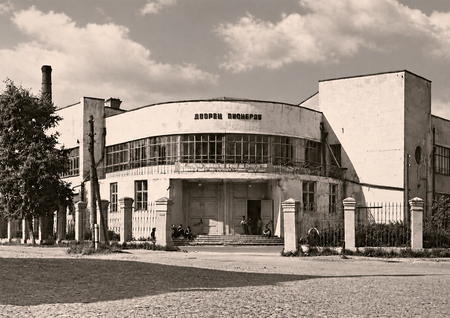
New Concept for the Tver Pioneer Palace
In my thesis project, I am working with a historical building that has changed its function twice. For me, this project became a way to test my approach in practice: to begin with an investigation of the existing context and, through it, arrive at a new usage scenario.
01. EXPLORE
One building has lived two different lives.
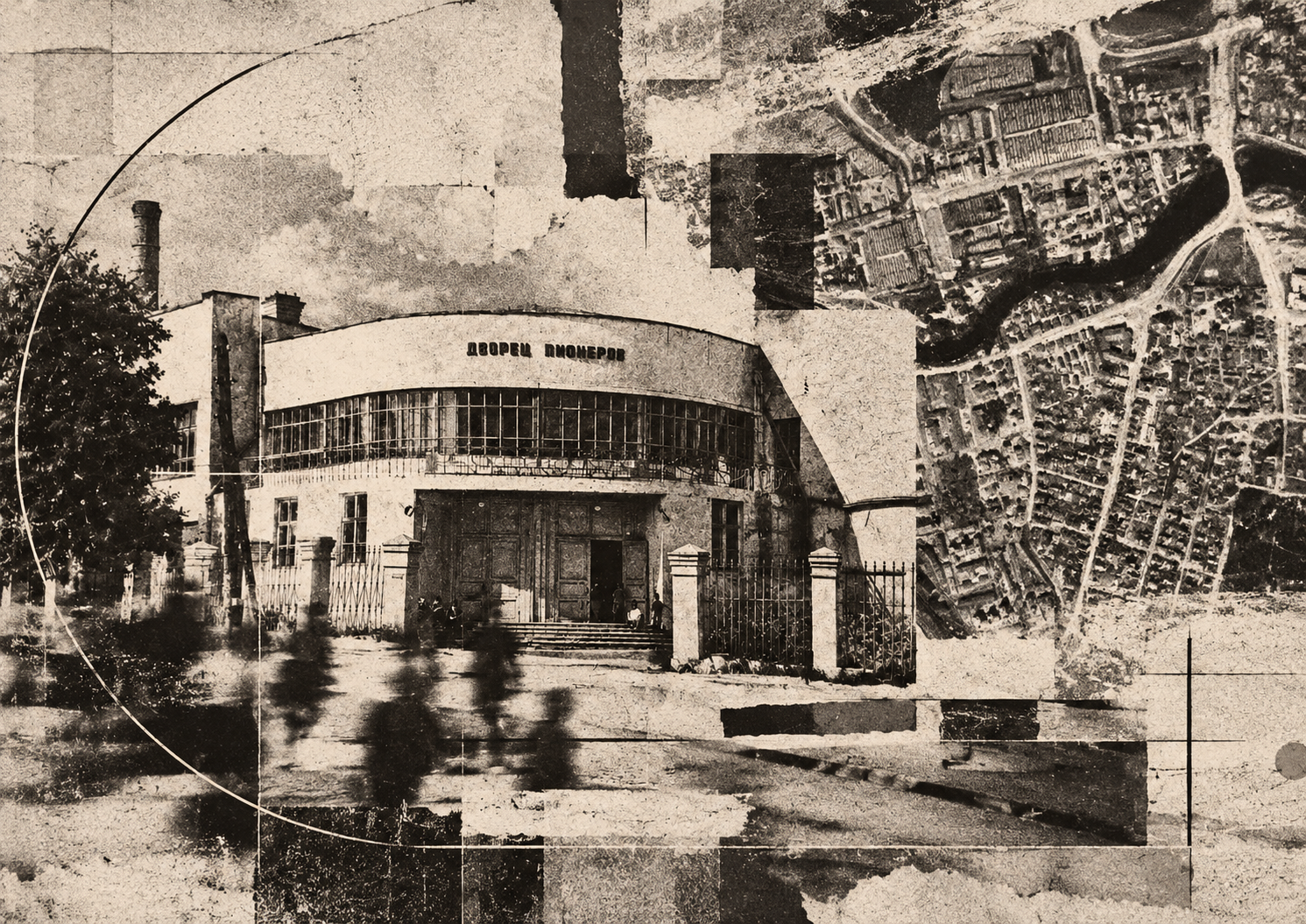
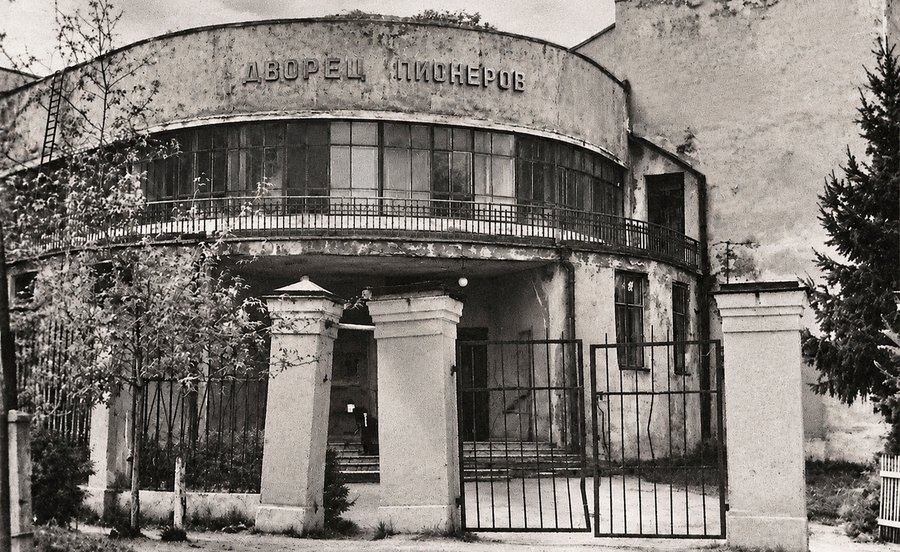
I began the research with the building’s history and its transformations. Originally, it was designed as a factory-kitchen, and by the late 1930s, it was converted into a Pioneers Palace.
When the building changed function, it did not start its history over again. The original architectural foundation was preserved but was augmented with a new spatial and artistic layer.
I FIRST LIFE: The Factory-KitchenThe building was designed as a factory-kitchen, a new type of public architecture for its time. Its initial function determined its Constructivist foundation, volume, and spatial structure.
II A SECOND LIFE: Pioneers' PalaceIn the late 1930s, the building acquired a new function. With the involvement of Ivan Leonidov and Vladimir Favorsky, the former kitchen factory was transformed into the Pioneers' Palace. This new life did not destroy the original architecture; rather, it augmented it with a new spatial and artistic layer.
III TODAY: The building is once again at a point of transformation.Today, its former function has been lost, but the building’s architectural and cultural value remains. The question of a new usage scenario arises before it again.
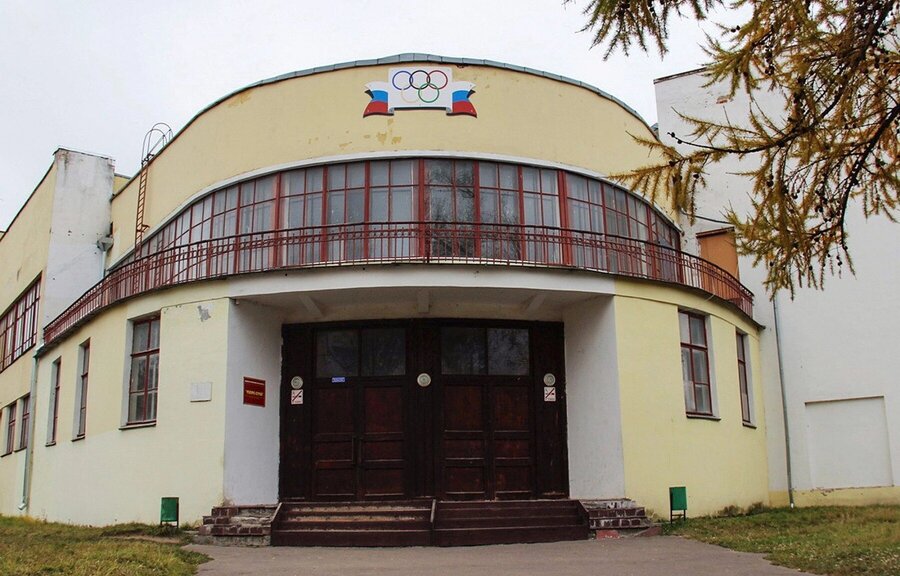
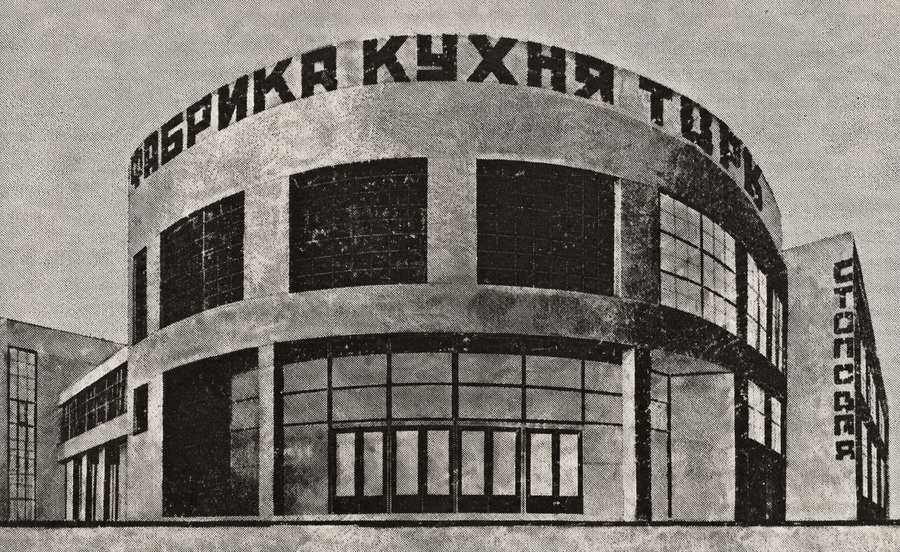
I / ФАБРИКА-КУХНЯ / 1929–1930
02. UNDERSTAND
A new function has, at one point, become an extension of the existing building.
Comparing the two periods showed that a change in function did not require a complete rejection of the existing architecture.
The building retained its core structure but gained a new usage narrative and a renewed meaning. This became the central conclusion of my research: its identity can persist not in spite of changes, but through them.
03. FORMULATE
The third transformation may not erase the past—it may continue it.
This observation became the core principle of the project. The building’s new life should not begin on a clean slate.
Instead, I propose working with the building’s existing identity, preserving it as the foundation for a new narrative and contemporary functions.
04. DESIGN
The new function continues the spirit of the previous one, rather than simply replicating it.
Based on research, I propose adapting the former Pioneer Palace into a modern center for creativity and culture.
The new program does not literally repeat the former function. It preserves its core idea: a space where people can learn, create, connect, and collaborate.
05. NEW SCENARIO
One building unites diverse formats of creativity and interaction.
The spatial program integrates educational, creative, and public functions. The building houses workshops, studios, spaces for learning, collaboration, meetings, and events.
For me, the goal was not simply to fill the building with new functions, but to weave them into a unified narrative that continues its public and creative role.
04/ WHAT IT SAYS ABOUT ME
FOR ME, A PROJECT BEGINS NOT WITH FORM, BUT WITH A QUESTION: WHAT ALREADY EXISTS, AND HOW CAN I WORK WITH IT?
I explore the context, find the foundation for the idea within it, and translate that into a spatial solution.
05/ WHY BOMAR?
I am interested in developing this approach in your firm’s projects.
In your practice, I am drawn to working with historical buildings and adapting them for contemporary use. I am keen to grow in projects where the existing context forms the foundation for a new solution.
06/ MY PROPOSAL
I WOULD BE DELIGHTED TO JOIN YOUR TEAM.
I am open to professional challenges and would be delighted to discuss the possibility of working together.
07/ LEARN MORE