«What If?» — a free Telegram media channel featuring short, unconventional creative prompts. Each issue challenges readers to invent, write, draw, or photograph something under a surprising condition. The prompts are designed to take 5–15 minutes and are accessible to people without professional skills. All you need to participate is a phone, paper, or imagination.
Goal — to help an individual begin creating through a small, specific action. Media provides a starting point when you want to create something but struggle to choose a topic or begin the work.
Data Sources
Data sources for «What If?» include materials used to create assignments: original ideas and observations, books and articles on creative work, and submissions and projects from readers. Channel analytics help us understand which topics and formats appeal to our audience.
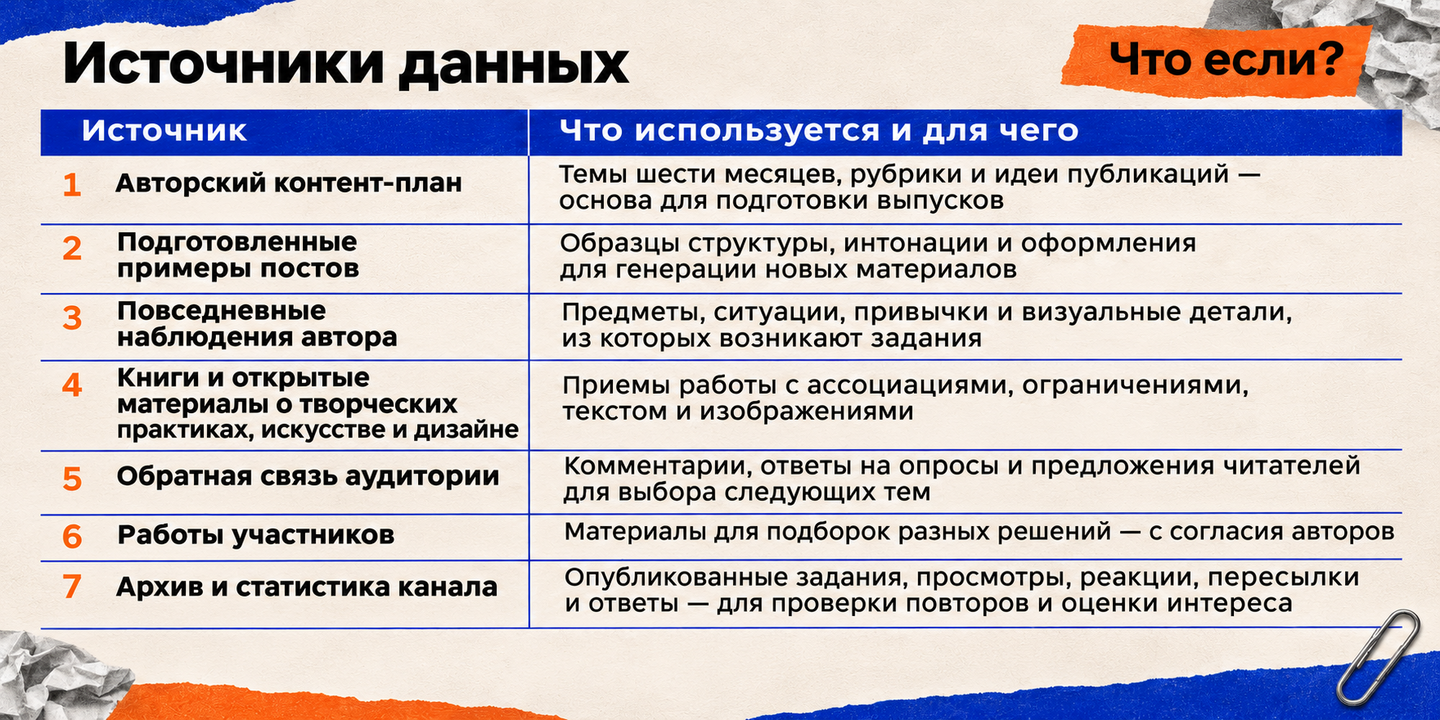
For external materials in the database, the title, author, and source link are saved. The neural network is used to process materials and create drafts, and its suggestions are reviewed by an editor.
Data schema separating human and machine processing
Data is stored in three related tables: Sources: identifier, title, link, author, brief idea.Publications: identifier, idea source, monthly theme, section, format, text, materials, completion time, expected outcome, visuals, status, and release date.Results: publication identifier, measurement date, views, reactions, shares, comments, and survey responses.
Publication Statuses: «Idea, ” „Draft, ” „In Review, ” „Approved, ” „Published.“ If the material requires revisions, it is returned to the draft stage. Publication is initiated only after author approval.
Guidelines for Automated Services in the Scheme
Organization and Planning Service
Helps organize an idea bank and create a publication schedule. Monitors the rotation of features, alignment with monthly themes, and variety of assignments.
Neural Network for Text Generation
Generates drafts of short creative assignments based on the content plan and post examples. It adheres to the publication structure and a friendly media tone before handing the text over to the author for review.
Visual Development Service
Helps create illustrations, cards, and scripts for short videos within a unified media style. The visuals supplement the assignment and help the reader understand what needs to be done.
Verification and Publication Service
Checks the completeness of materials and notes any errors before the post goes live. After author approval, publishes the finished issue on schedule.
Analytics Service
Gathers publication metrics and reader feedback to generate a monthly summary. Helps the author gauge interest in various sections and adjust the content plan accordingly.