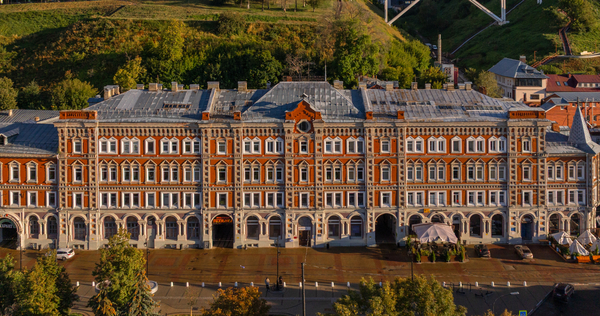
The project focuses on developing the visual identity for a multi-brand vintage space in Nizhny Novgorod, which unites independent shops and selective projects. This is a place where each participant maintains their own identity, and shoppers have the opportunity to explore the diversity of vintage collections and find unique items in one space.

Vintage—
an item created 20 to 99 years ago that has the recognizable aesthetic of a specific eraHow the Vintage Market Works
Unlike conventional fashion retail, where goods are produced in mass quantities and arrive in the store as a finished collection:
producer $\rightarrow$ collection $\rightarrow$ store $\rightarrow$ buyer
The vintage market is built around the search for and selection of existing items:
various sources $\rightarrow$ search $\rightarrow$ selection $\rightarrow$ evaluation $\rightarrow$ recovery $\rightarrow$ individual item $\rightarrow$ customer
Therefore, the expertise of the seller is particularly crucial here: they are not simply selling an item, but independently sourcing, curating, and determining its value.
The Secondary Clothing Market in Nizhny Novgorod
During 2025–early 2026, participants in the Nizhny Novgorod resale market noted a decline in offline sales and purchasing power. Offline businesses, meanwhile, remain expensive and unstable. Most local projects remain small microbusinesses or passion projects, rather than sustainable sources of income.
Interest in vintage is growing → the audience is broadening → but it’s becoming increasingly difficult for small shops to maintain a dedicated physical space.
The Core Problem
Small vintage projects in Nizhny Novgorod struggle to open their own physical stores due to high operating costs and inconsistent demand. Meanwhile, sellers and buyers remain disconnected.Goal
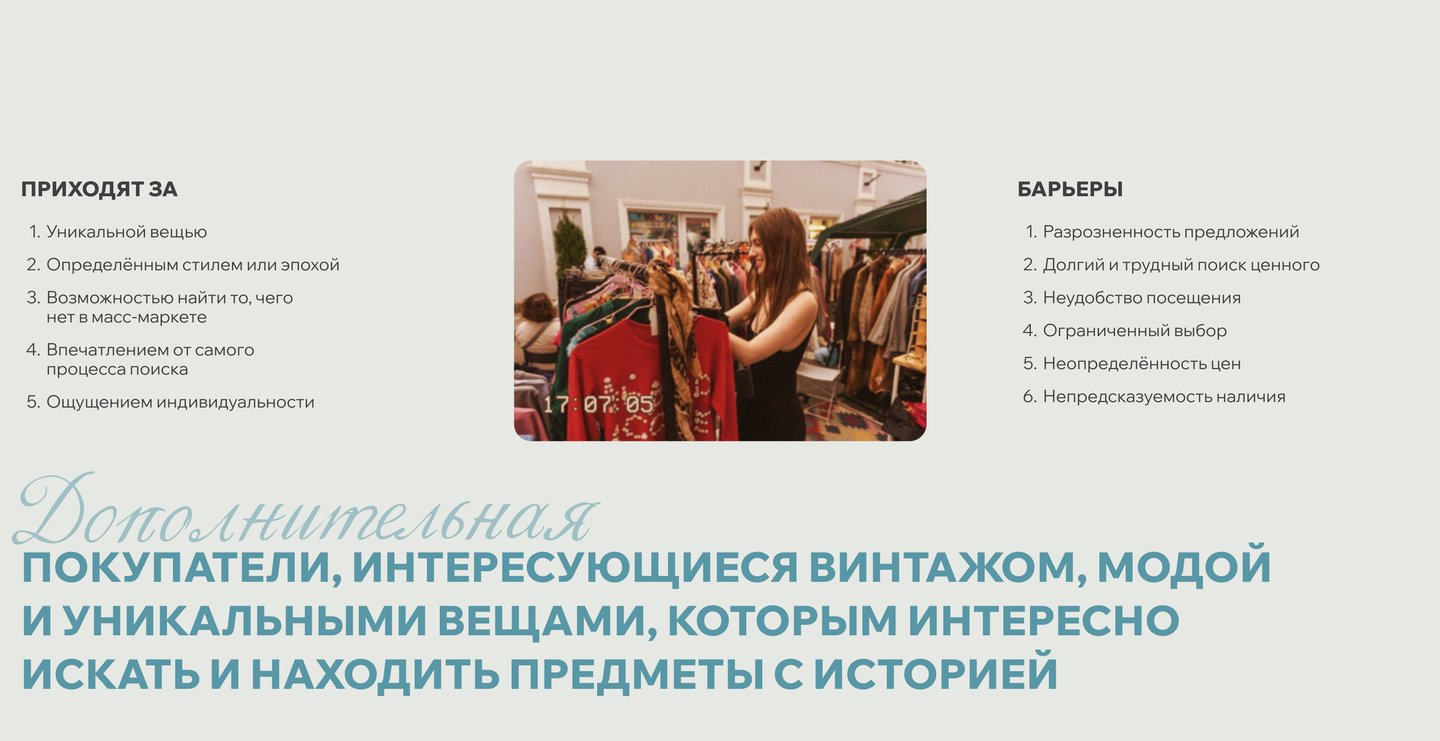
To create a sustainable model for a shared offline space for local vintage brands in Nizhny NovgorodTarget Audience










Step 3. Solution
Представьте подход, метод или продукт
Formulate your solution simply and to the point: what exactly are you proposing and what problem does it solve?
First, present the general concept, and only elaborate on the mechanism and workflow if necessary.
Keep the focus on the core idea—details can be relegated to supplementary slides.








Step 4. Defense
Подтвердите состоятельность решения
Substantiate key claims with facts, examples, and measurable outcomes.
Use case studies, data points, demonstrations, and practical breakdowns—these reduce skepticism and make your solution verifiable.
If your audience might have any doubts, it is best to address them here in advance.









Step 5. Action
Переведите понимание в решение
Formulate a clear next step for the audience: what exactly are they being asked to do after the presentation.
Specify the format, stages, or conditions if they influence the decision.
A strong call-to-action slide eliminates ambiguity and converts interest into choice.









Step 6. Final
Зафиксируйте главный смысл и оставить сильное послевкусие
Articulate the central thesis of the entire presentation in a concise and memorable way.
You can revisit the original problem and demonstrate the new state after implementing the solution.
The final screen must retain the core message and direction—even if the audience remembers nothing else.