
SERAPHIM
PART 1.
COMMUNICATION THEORY IN CONTEMPORARY DESIGN AND ART
Communication as Meaning-Making Design
In contemporary design, communication transcends mere information transfer. It becomes the creation of meaning, constructing consumer reality through systems of signs, codes, and narratives. This manifests most clearly in perfumery, a product existing on the boundary between the material (bottle, molecules) and the immaterial (memory, emotion, identity).
Lasswell’s classic model («Who speaks? What? To whom? Through which channel? With what effect?») demonstrates how the same message transforms depending on the recipient and medium. The designer does not simply «make it beautiful», they make strategic decisions about how different groups should perceive the same object.
In art, particularly niche or conceptual design, communication gains an additional layer of complexity. Barthes spoke of «myth», a system of meanings that appears natural but is actually constructed. When we design perfume not as a product but as a narrative, we operate precisely at this level: creating a myth that consumers wish to appropriate.
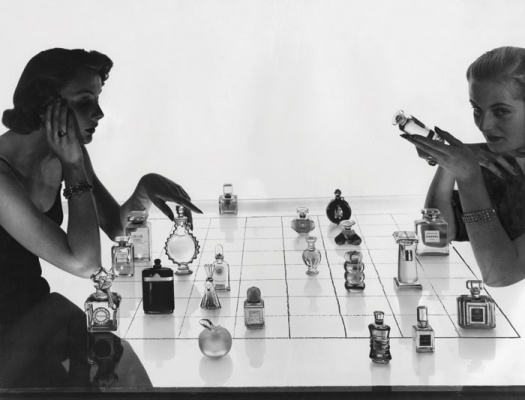
Michael Wickham per Vogue, 1951
Two Audiences, Two Codes: Adaptation as Strategy
Communication theory teaches that messages must adapt to the audience’s code. The same information can be presented through emotion or reason.
For the mass audience, a sensory, narrative code works. People crave stories where they see themselves. They do not buy molecules but dream-images: «I am the one who feels this duality, this is my sin, my beauty.»
For professionals, an analytical code applies. They value complexity, innovation, expertise. They want to know the pyramid, concentration, logic of each component choice. For them, communication justifies price and market position.
Yet both audiences speak of the same object, they simply use different «languages» to describe it.
Narrative Communication and the Myth of Consumption
Postmodernism revealed that consumers buy not products but belonging to myths, symbolic identity. This is no marketing trick; it is the reality of modern consumption: the product is a text read by the body and lifestyle.
SERAPHIM, in this sense, is not perfume but entry into the myth of the «divine flaw.» The broad presentation creates the myth’s atmosphere (video, emotions, imagery). The professional presentation reveals the myth’s architecture (how it was constructed, why each element functions).
Effective communication in design is creating a cohesive world where all elements serve one meaning.
PART 2.
SERAPHIM PRESENTATION FOR BROAD AUDIENCE
SERAPHIM
Your heavenly flaw. Your sin worthy of adoration.
There is a moment when an angel loses balance. Not falling. Precisely losing balance, in that second when it sees something forbidden to its nature. Something human. Beautiful. Sinful.
Seraphim is not a cherub with pink wings. This is an archangel, many-eyed guardian of the heavens. Its closeness to God is absolute. And in this absolute hides almost pride: awareness of its own beauty as a force surpassing reason.
SERAPHIM is the perfume of this moment. The moment when the divine trembles before the human. When purity of spirit meets the sinfulness of flesh and discovers they are inseparable.
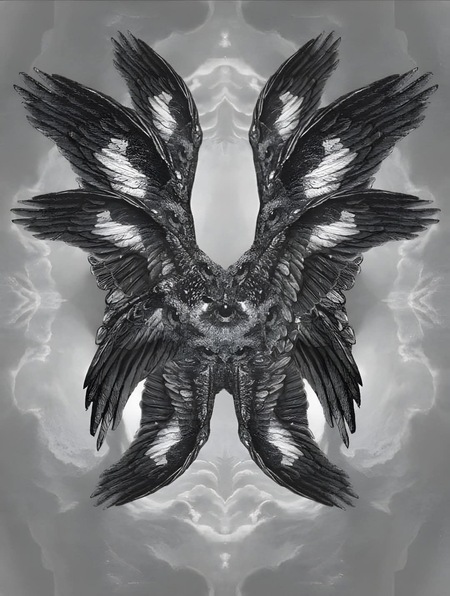
«Seraphim I» Dan Hillier, 2022

Seraphim, the highest rank of angel
Architecture of Inhalation
The bottle is a frozen tear from the firmament or a crystal shard. Its wings are etched with cold engraving to preserve absolute transparency: through them shines the color of the fragrance itself, a tender, bashful blush, as if an angel blushed before its own beauty.
The first breath is a flash.
Top notes: Pink pepper and bergamot.
Not sour citrus. Sharp, hot spark. Awakening. Primordial surge of consciousness before temptation. A few seconds and the fragrance begins to unfold, as if wings are spreading.
Heart: Turkish rose meets green strawberry.
Rose is flesh, fullness, sensuality. It is thick, oily, almost sticky in its humanity. Strawberry is not jam, not sweetness. This is green, slightly tart berry. Eden. Forbidden fruit in the moment when it can still be returned, but impossible to forget. Between them frankincense (Olibanum). Not temple, not prayer frankincense. This is resinous, smoky, mineral pillar. Spirituality around which flesh entwines. Conflict become scent.
For four hours pink strawberry and frankincense dance: one tries to pull upward, the other holds by the heels.
Base: Cedar, vanilla, amber.
Atlas cedar is ascetic, strict, almost woody crunch. Vanilla, but not sweet, balsamic, almost leathery, like the scent of old parchment. Amber is fixer and bridge between these opposites.
Result: dry, slightly sweet base on a resinous-woody skeleton. The fragrance lasts 12+ hours, but it does not scream. It haunts. It stays with you, like a memory of temptation you do not deny, but celebrate.
Who is this for?
For those tired of one-dimensional chypres. Of gourmand orientals screaming sweetness and power.
For narrative connoisseurs. For those for whom «Portrait of a Lady» by Frederic Malle is not just perfume, but a book. «Baccarat Rouge 540» is a story of color and power.
For a generation seeking spirituality beyond dogmas and beauty beyond perfection. Which knows true beauty lives in tension, in conflict, in the impossibility of choosing between heaven and earth.
SERAPHIM is your sin worthy of adoration. This heavenly flaw makes you alive.
PART 3.
SERAPHIM PRESENTATION FOR PROFESSIONAL AUDIENCE
SERAPHIM: WHEN DECADENCE MEETS APOCRYPHA.
Positioning: Niche premium perfume for the «intelligent luxury» segment (LVMH Fragrance, Frederic Malle, Xerjoff).
1. PHILOSOPHICAL AND CONCEPTUAL FOUNDATION
Core Idea: «Sacred sin» as the duality of divine and human through the lens of Decadent aesthetics and biblical apocrypha.
Sources:
• Decadent aesthetics (Huysmans, À rebours; Baudelaire, Flowers of Evil). • Biblical apocrypha: Book of Enoch, Apocalypse, concept of fallen angels as beings knowing the forbidden. • Archangel Seraphim (Isaiah 6:2-6) as a figure on the boundary of divine and human consciousness.
Narrative:
Seraphim is not Cupid, not a guardian angel. This is an archangel, many-eyed heavenly guardian (symbolism from Dante’s «Inner Heaven»), whose proximity to God breeds not humility, but near-pride awareness of its own beauty as power. In this pride hides sin. And in this sin apocatastasis (restoration of wholeness).
The product positions as materialization of this tension: neither «holiness» nor «sin», but their seductive opposition.
Fallen Angel
2. OLFACTORY ARCHITECTURE
Concentration:
• Eau de Parfum, 18% fragrance composition. • Longevity: 12-16 hours on skin. • Volume: 50 ml (bottle), 5 ml (sample).
Technical Specifications:
• Molecular structure: complex mix of natural absolutes (70%) and synthetic modifiers (30%). • Uniqueness: 8% Olibanum creates mineral skeleton, rare for feminine perfumes. • Balance: sharp apex → conflicted heart → ascetic base (psychological narrative through scent).
Pyramid
Pyramid of aromas «SERAPHIM»
3. DESIGN AND SEMIOTICS OF THE OBJECT
Bottle:
• Material: transparent borosilicate glass (cold engraving technique). • Form: geometric, evoking both crystal shard and frozen tear. • Wings: engraving with ultra-fine pattern preserving transparency (technique: micro-engraving on specialized equipment). • Liquid color: Blush (RGB 255, 192, 203)—visible through transparent bottle. • Sprayer: matte gold (contrast with glass coldness).
Semiotic Analysis:
• Sign: Bottle.
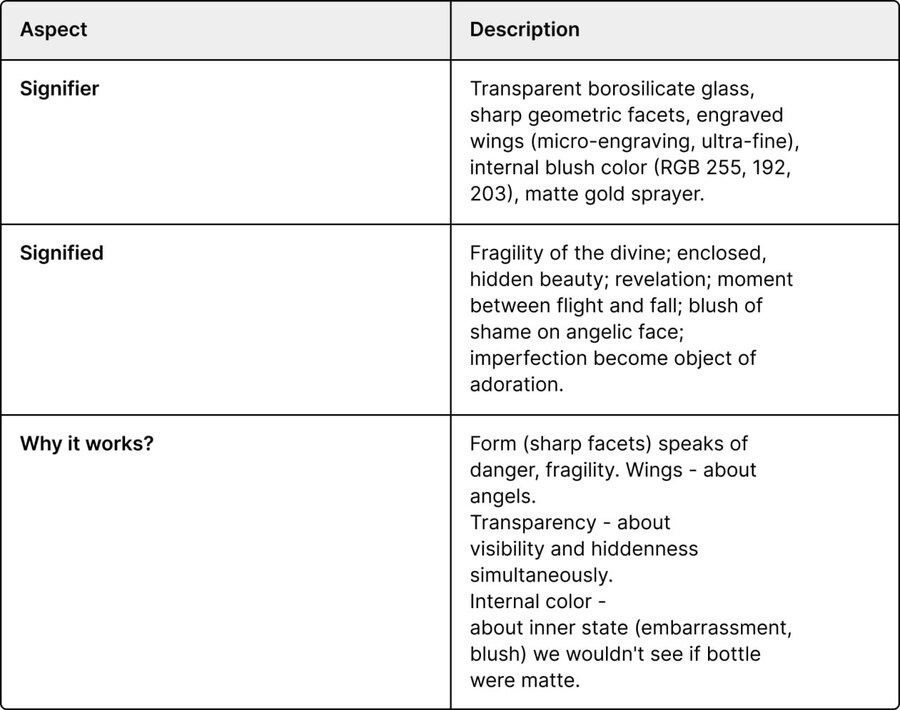
Signifier: transparent glass, sharp facets, engraved wings, internal blush color. Signified: fragility of the divine, revelation, moment between fall and flight, blush of shame on angelic face.
• Sign: Name «SERAPHIM».
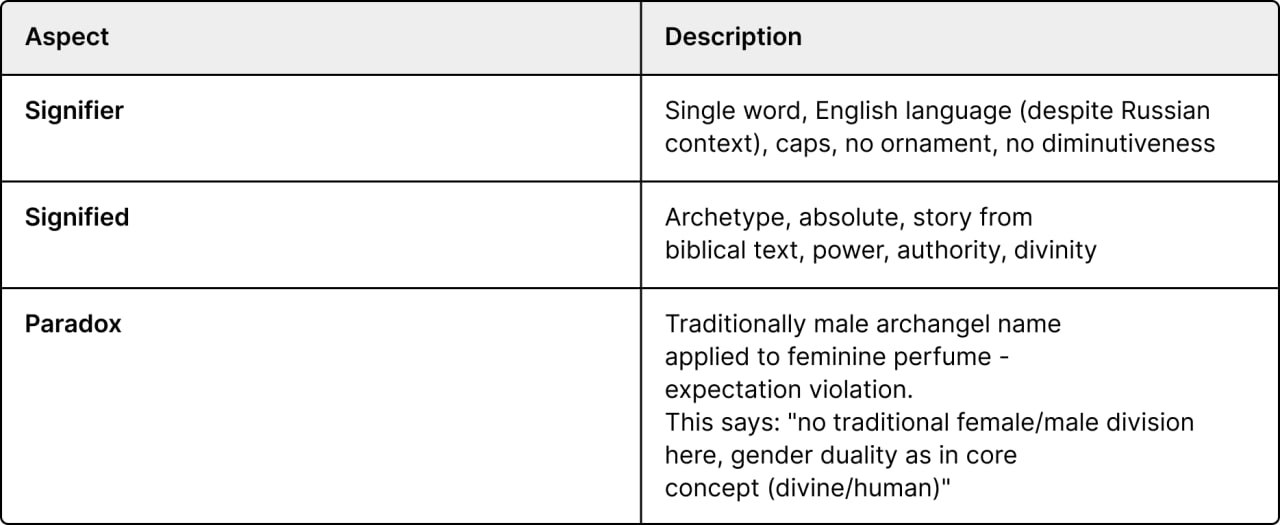
Signifier: single word, caps, no ornament. Signified: archetype, absolute, rejection of diminutiveness; male archangel name in feminine context (expectation violation).
• Sign: Slogan «Your Heavenly Flaw».
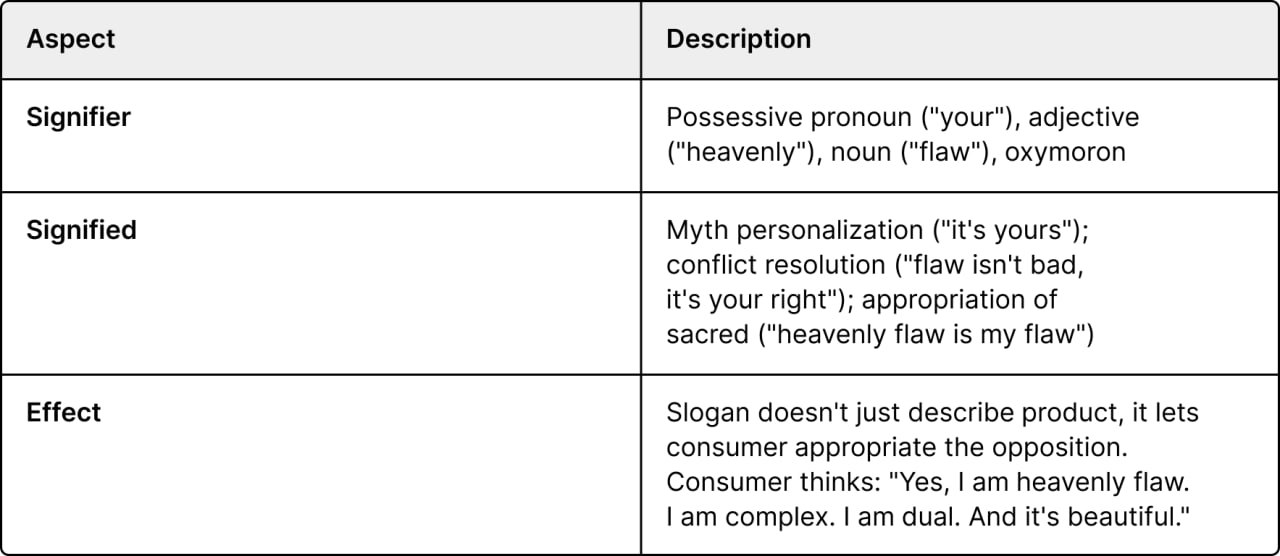
Signifier: possessive («your»), oxymoron («heavenly» + «flaw»). Signified: myth personalization; conflict resolution («your right to be imperfect and divine simultaneously»).
Packaging:
• Material: black kraft cardboard (sustainability, premium). • Engraving: name, logo (minimalist), slogan in gold (contrast). • Insert: textile (beige or black) with concept and pyramid explanation (consumer narrative engagement).
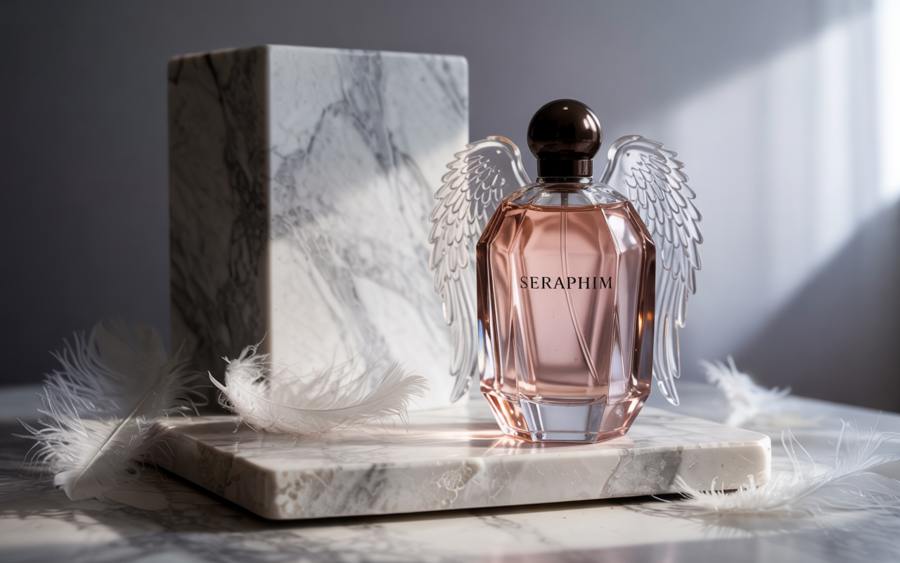
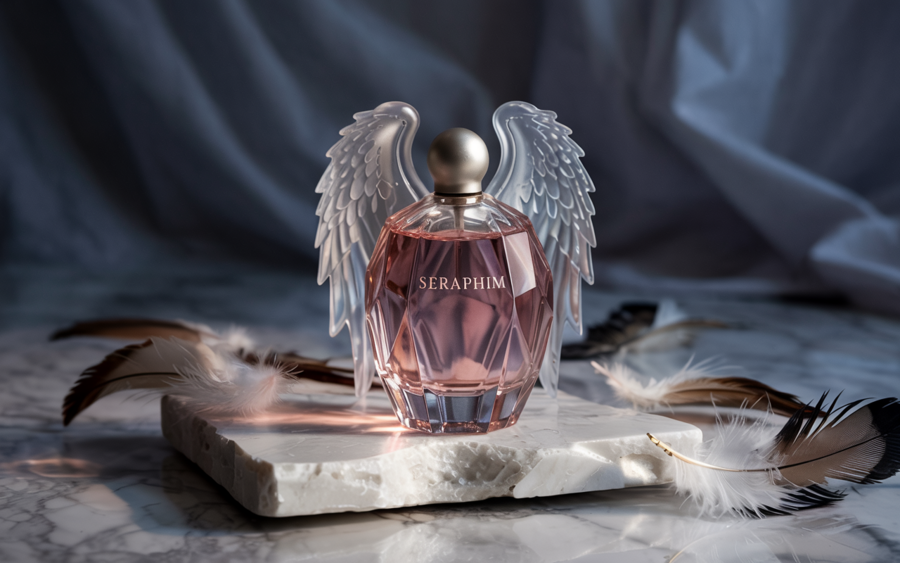
Generated example of «SERAPHIM» bottle
4. TARGET AUDIENCE AND MARKET POSITIONING
Primary Audience:
Women 25-45 years with high cultural capital.
• Education: higher, often in arts, design, humanities. • Consumption: follow niche perfumery, know brands (Frederic Malle, Diptyque, Xerjoff, Miller Harris). • Philosophy: seek meaning in consumption; do not buy «beauty, ” buy „story“. • Income: middle-high (able to spend €200-300 on perfume as identity investment).
Secondary Audience: Men 28-50 years interested in experimental perfumery (niche unisex trend).
Market Position:
• Category: Niche perfume, „Intelligent Luxury“. • Price: €250 for 50 ml (premium pricing justified by quality, concept, limited edition). • Distribution: niche perfumeries, online platforms (MolecularFragrances, Fragrantica, own website). • Competitors (by concept): „Laudamiel“ (Frederic Malle inner experience scent), „Une Rose“ (Frederic Malle rose in conflict), „Baccarat Rouge 540“ (Francis Kurkdjian mineral + sweet). • USP (Unique Selling Proposition): Olibanum combined with green strawberry and minerality (absent from market); philosophical foundation in Decadence and apocrypha (narrative as product); experimental base (balsamic vanilla vs. traditional sweetness).
5. MARKETING COMMUNICATION
Level 1: Emotional Narrative (social media, video, influencers).
• Key message: «Your sin worthy of adoration». • Channel: Instagram, TikTok, YouTube. • Format: micro-videos (15-30 sec) with imagery, ASMR spraying, Baudelaire/Huysmans quotes, metaphorical images of wings, flame, candles. • Tone: intriguing, poetic, slightly provocative (wordplay on «sin»).
Level 2: Expert Discourse (press, pitch, presentations).
• Key message: «Architecture of semiotic conflict». • Channel: niche perfumery publications (Fragrantica, Basenotes, perfume blogs), B2B presentations. • Format: detailed pyramid, component choice explanation, philosophical source references, price justification through quality and innovation. • Tone: analytical, scientific, referencing design theory.


6. COMPETITIVE ADVANTAGE
Competitive advantage
7. PRICING AND ECONOMICS
• Perfume cost price: €35-40 per unit (natural components, limited production). • Packaging & design: €20-25 (engraving, textile, premium cardboard). • Marketing & distribution: €30-40 (social media, PR, niche channels). • Retail price: €250 (margin ~180%, standard for niche luxury). • First edition volume: 500 units (creating scarcity, maintaining exclusivity).

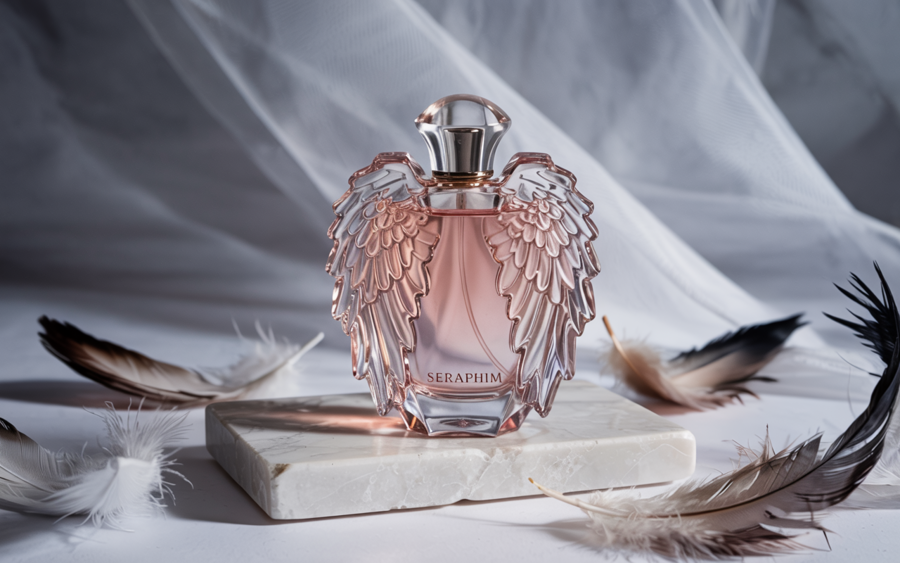
Generated example of «SERAPHIM» bottle
8. KEY SUCCESS METRICS
• Brand recognition in niche perfumery communities (Basenotes, Fragrantica) within 6 months. • Number of concept reposts (pyramid) in social media. • Target audience growth through «smart influencers» (non-mass but authoritative in niche). • Production profitability (break-even within 12-18 months).
Generated example of «SERAPHIM» bottle
PART 4.
HOW COMMUNICATION THEORY SERVED AS FOUNDATION FOR PRESENTATIONS
PRINCIPLE 1: MESSAGE ADAPTATION TO AUDIENCE (LASWELL MODEL)
Concept: Lasswell posed the question: «Who? Says what? To whom? Through which channel? With what effect?» This model shows how the same information transforms depending on recipient and context.
Application to SERAPHIM:
We created two fundamentally different messages about the same object:
For broad audience (emotional narrative): (See 1 table below).
Mechanics: Instead of saying «this is perfume with rose and frankincense», we tell a story of an angel blushing before its own beauty. The person does not buy molecules, they enter the myth.
For professionals (rational discourse): (See 2 table below).
Mechanics: Here we reveal the myth’s architecture. We explain why 8% Olibanum, why green strawberry (not sweet), why balsamic vanilla. Effect professional sees the product is not random, it is deliberate, innovative. This justifies price and positions creator as designer, not mere perfumer.
Conclusion: Lasswell showed communication is not monologue, but adaptive dialogue. We use his model to create two realities of one product, each convincing for its audience.
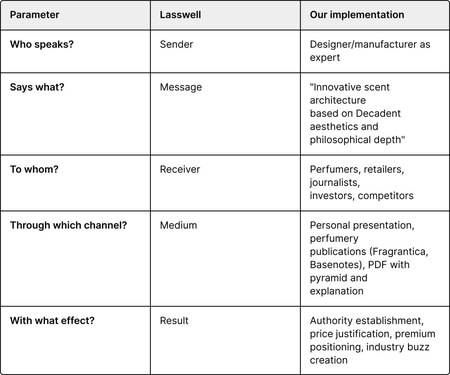
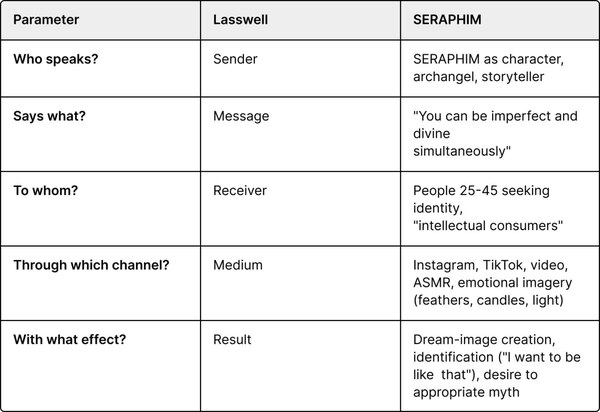
For broad audience (emotional narrative) and for professionals (rational discourse)
PRINCIPLE 2: CODES AND CONVENTIONS
Concept: Culture operates through codes recurring, understandable systems of meaning. Rose = romance. Frankincense = holiness. Black = luxury. Codes save time: we don’t re-explain why rose means love each time.
But codes can be recoded—by colliding familiar signs with unexpected contexts, creating tension and novelty.
Application to SERAPHIM: Layer 1: Using familiar codes (See table below).
Layer 2: Recoding (conflict creation).
We take these familiar codes and collide them:
1. Rose meets strawberry, flesh vs. childhood, adult vs. innocent opposition. 2. Frankincense meets strawberry, spirituality meets forbidden fruit. 3. Angel named «sinful», violation of divine hierarchy. 4. Glass «blushes», inanimate material gains emotion (shame, embarrassment). 5. «Heavenly flaw», oxymoron forbidding choice between ideal and reality.
Effect for mass audience: Person sees familiar images (rose, angel, paradise), but they collide strangely. Intrigue arises: «How can this be simultaneous?» This attracts attention and creates desire to solve the paradox.
Effect for professionals: We explicitly name these codes and explain their recoding through semiotics and Decadent philosophy. Professional sees mastery in sign construction. This proves the product is not random.
Conclusion: Codes and conventions are culture’s language. SERAPHIM uses this language but speaks with an accent, grammatical violation. This accent precisely creates novelty and appeal.
Using familiar codes
PRINCIPLE 3: SEMIOTICS (SIGN, SIGNIFIER, SIGNIFIED)
Concept: De Saussure showed the sign consists of two components:
• Signifier (signifiant) form, sound, image (what we see/hear) • Signified (signifié) meaning, concept, sense (what it means)
The connection between them is arbitrary (word «rose» doesn’t contain a rose, it’s just convention). But in design, we can construct, strengthen, transform this connection.
Application to SERAPHIM:
The entire product concept is a game of signifiers and signifieds.
Analysis of main signs:
SIGN 1: BOTTLE: (See table 1 below).
SIGN 2: NAME «SERAPHIM»: (See table 2 below).
SIGN 3: SLOGAN «YOUR HEAVENLY FLAW»: (See table 3 below).
SIGN 4: SCENT PYRAMID (NARRATIVE STRUCTURE): (See table 4 below).
Conclusion: Semiotics shows form is NOT decoration, it is language of meaning. Every SERAPHIM element (bottle, name, color, scent pyramid) is semiotic gesture. They are not just beautiful, they speak. And they say one thing: about duality, conflict, that true beauty lives in tension.
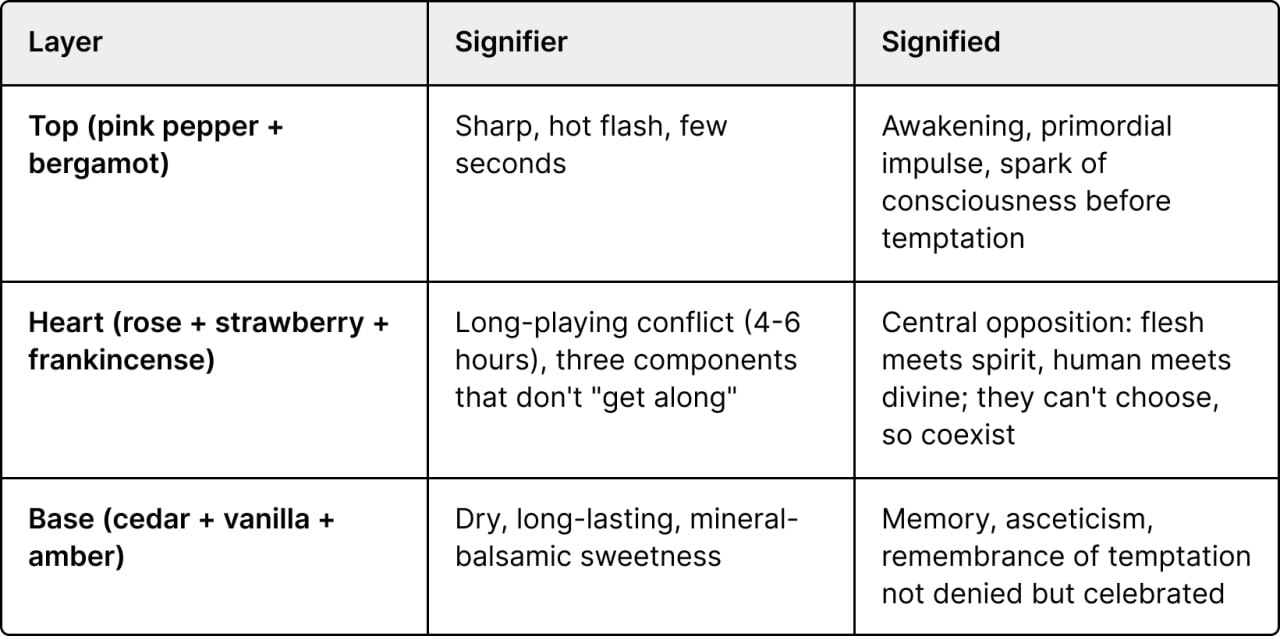
PRINCIPLE 4: STORYTELLING AND NARRATIVE COMMUNICATION
Concept: Modern consumer doesn’t buy product, buys the story product tells about itself. Narrative communication is creating a world consumer can enter and live in.
Examples: «Coca-Cola» doesn’t sell sugary water, sells «opening happiness.» «Apple» doesn’t sell electronics, sells «innovation and simplicity» as lifestyle.
Application to SERAPHIM:
Story 1: For mass audience (emotional trailer)
Plot: Angel loses balance.
Beginning: Seraphim, many-eyed archangel, stands at heaven’s border. Its closeness to God is absolute. But in this absolute hides sin: awareness of own beauty.
Development: Sees something forbidden (earthly, human, sinful). Primordial impulse (pink pepper, bergamot). Its coordinate system begins to collapse.
Climax: Flesh (rose) meets spirit (frankincense). Forbidden fruit (strawberry) whirls in prayer. Impossible emerges simultaneous existence of oppositions. Blush of shame on angelic face.
Resolution: Doesn’t fall. Remains in this tension. Discovers it is its true beauty.
Effect: Consumer sees herself in this story. Not perfect, has oppositions (rational/irrational, strong/weak, divine/sinful). Story says: not problem, your reality, your sin worthy of adoration.
She doesn’t just buy perfume. She enters myth about herself.


Generated example of «SERAPHIM» bottle
Story 2: For professionals (script and architecture)
Plot: How narrative was constructed through scent.
Beginning: Philosophical foundation. Huysmans Decadence. Apocrypha. «Sacred sin» idea.
Development: How this idea translates to olfactory architecture. Pink pepper (sharpness) as awakening moment. Rose+strawberry+frankincense as central conflict. Cedar+vanilla as memory.
Architecture: Pyramid doesn’t just smell good. Tells story through time. First 5 minutes impulse. Next 4-6 hours conflict. Last 6+ hours memory.
Conclusion: Each component chosen not for beauty, but meaning. Not perfume, narrative object.
Effect: Professional sees mastery. Understands before him not random ingredient mix, but meaning architecture. Justifies price, positions creator as thinker-designer, not mere perfumer.
Synthesis: How narrative works for both audiences. (See table below).
Both stories about the same object, but speak different languages.
Conclusion: Storytelling showed us design communication is not informing, but invitation to live in a world. SERAPHIM creates not product, but entry to myth of duality, conflict, beauty of imperfection. This myth works because people want to live in it.
Synthesis: How narrative works for both audiences
PART 5.
CONCLUSION
SUMMARY: THEORY AS TRANSFORMATION TOOL
Communication theory from online course served not just background, but project architecture:
• Lasswell showed one message must adapt to different audiences. We created two presentations emotional and analytical. • Codes and conventions taught culture works through repetition, but novelty born from recoding. We took familiar images (rose, angel) and collided them unexpectedly. • Semiotics gave tool for meaningful forms creation. Bottle, name, slogan, scent pyramid each element designed as sign carrying meaning. • Narrative communication showed product is text read by body and lifestyle. We created not just perfume, but myth entry.
Result: Scattered associations (glass, feathers, strawberry, sin) transformed into cohesive, targeted, effective communication product. Theory became instruction for meaning design.

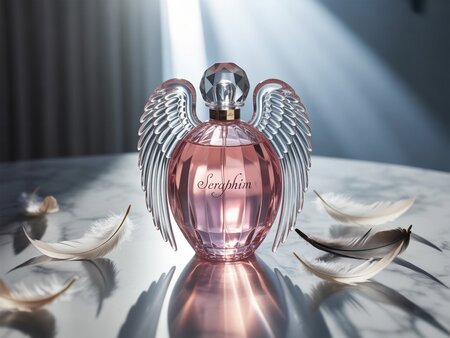
Generated example of «SERAPHIM» bottle
SERAPHIM project demonstrates how communication theory transforms scattered associations into cohesive design object. Through message adaptation (Lasswell), code recoding, semiotic design (Barthes), and narrative architecture (Barthes, Hall), we created product that simultaneously:
• Communicates emotion and desire to broad audience (through myth). • Communicates quality and innovation to professionals (through analysis). • Remains true to single philosophical idea: divine/ human duality, beauty in conflict, sin worthy of adoration.
This is not just perfume. This is constructed narrative packaged in glass and scent.
PART 6.
LITERATURE AND SOURCES
Barthes R. Mythologies. Paris: Éditions du Seuil, 1957. [Барт Р. Мифологии / пер. с фр. А. Кукаркина. М.: Политиздат, 1996. 256 с.]
Barthes R. S/Z. Paris: Éditions du Seuil, 1970.
Saussure F. de. Cours de linguistique générale. Lausanne; Paris: Payot, 1916. [Де Соссюр Ф. Курс общей лингвистики / пер. с фр. А. Колесникова. М.: ЛКИ, 2011. 496 с.]
Lasswell H. The Structure and Function of Communication in Society // The Communication of Ideas / ed. L. Bryson. New York: Harper & Brothers, 1948. 37–51 с.
Hall S. Encoding and Decoding in the Television Discourse // Culture, Media, Language. London: Hutchinson, 1980. 128–138 с.
Huysmans J.-K. À rebours. Paris: Charpentier, 1884. [Юсманс Ж.-К. Наоборот / пер. с фр. В. Брюсова. М.: Скорпион, 1911. 312 с.]
Baudelaire C. Les Fleurs du Mal. Paris: Poulet-Malassis et de Broise, 1857. [Бодлер Ш. Цветы зла / пер. с фр. Ю. Балтрушайтиса и др. М.: Художественная литература, 1989. 432 с.]
Книга Еноха // Апокрифы древних христиан. Кн. 1 / пер. с древнеэф. и комм. Н. Бронзниковой. М.: Ладомир, 1996. 384 с.
Dante Alighieri. La Divina Commedia. Paradiso. Firenze, 1320. [Данте А. Божественная комедия. Рай / пер. с итал. М. Лозинского. М.: Художественная литература, 1967. 352 с.]
Edwards M. Fragrances of the World. Sydney: Michael Edwards, 2016.
Une Rose / Frederic Malle. Офиц. материалы бренда и интервью с парфюмером.
Süskind P. Das Parfum: Die Geschichte eines Mörders. Zürich: Diogenes, 1985. [Зюскинд П. Парфюмер. История одного убийцы / пер. с нем. В. Веденского. М.: Независимая газета, 1991. 256 с.]
Pentagram. Design as Communication. London: Phaidon Press, 2020.
Hunt A., Glanford E. The Grammar of Graphic Design. London: Thames & Hudson, 2017.
Frederic Malle. Официальный сайт бренда. URL: https://www.fredericmalle.com (дата обращения: 03.12.2025).
Hermès. Официальный сайт бренда. Раздел «Fragrances». URL: https://www.hermes.com (дата обращения: 07.12.2025).
MoMA Design Store. Официальный сайт магазина. URL: https://www.momastore.org (дата обращения: 05.12.2025).
Unsplash. Категория «Crystal glass close-up». URL: https://unsplash.com/search/crystal-glass (дата обращения: 01.12.2025).
Pantone. Fashion Color Report. Цвет Blush (RGB 255, 192, 203). URL: https://www.pantone.com (дата обращения: 10.12.2025).
Pinterest. Подборка «Luxury fragrance packaging». URL: https://www.pinterest.com (дата обращения: 04.12.2025).
Unsplash. Категория «Gold metallic texture». URL: https://unsplash.com/search/gold (дата обращения: 09.12.2025).
Freepik. Вектор «Angel wings silhouette». URL: https://www.freepik.com (дата обращения: 02.12.2025).
Wikimedia Commons. Коллекция изображений ангелов в иконографии и живописи. URL: https://commons.wikimedia.org (дата обращения: 08.12.2025).
Unsplash. Категория «Turkish rose close-up». URL: https://unsplash.com/search/rose (дата обращения: 06.12.2025).
Unsplash. Категория «Green strawberry field». URL: https://unsplash.com/search/strawberry (дата обращения: 11.12.2025).
Unsplash. Категория «Cedar tree». URL: https://unsplash.com/search/cedar (дата обращения: 02.12.2025).
Wikimedia Commons. Изображение «Olibanum resin». URL: https://commons.wikimedia.org (дата обращения: 12.12.2025).
Pexels. Видеоматериалы и фото «Frankincense smoke». URL: https://www.pexels.com (дата обращения: 05.12.2025).
Google Arts & Culture. Подборка «Symbolism Painting». URL: https://artsandculture.google.com (дата обращения: 09.12.2025).
Pinterest. Подборка «Art Deco luxury design». URL: https://www.pinterest.com (дата обращения: 01.12.2025).
Fragrantica. Онлайн‑энциклопедия парфюмерии. URL: https://www.fragrantica.com (дата обращения: 07.12.2025).
Basenotes. Портал о нишевой парфюмерии. URL: https://www.basenotes.net (дата обращения: 10.12.2025).