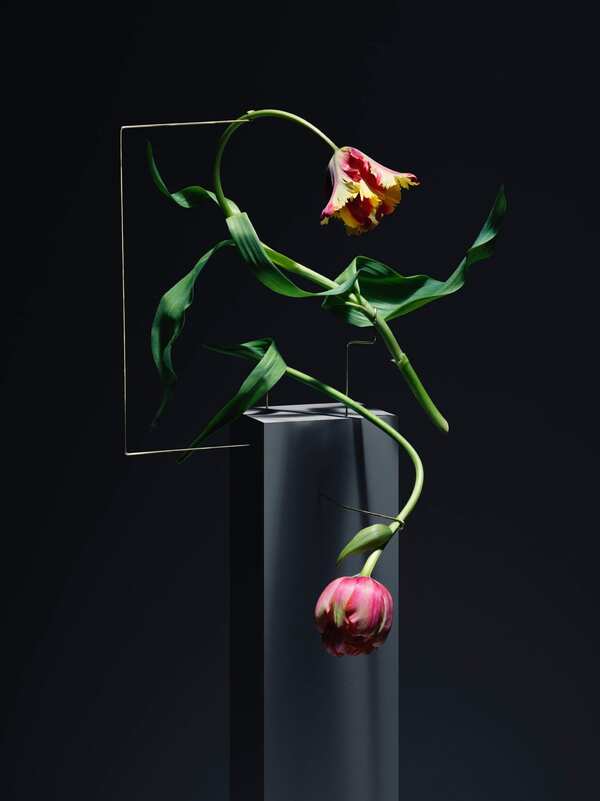
The tulip, known as «lale» in Turkish, had a deep meaning in the artistic and architectural landscape of the Ottoman Empire. Its introduction to the region from Central Asia in the 16th century brought about a cultural revolution, leading to the tulip’s integration into various facets of Ottoman life, especially in art and architecture, particularly in tile art.
In Ottoman art, the tulip served as a symbol of beauty, prosperity, and prosperity. Artists, enamored by its elegant form and vibrant tones, incorporated tulips into their creations, capturing its essence in paintings, textiles, manuscripts, and, most importantly, in tile art. Tulip motifs decorated the walls, ceilings, and facades of palaces, mosques, and other significant buildings throughout the empire.
Tile art, or «çini» in Turkish, became a most characteristic of Ottoman artistic identity, with tulip patterns being among the most widespread designs. Skilled artists meticulously crafted intricate tile compositions featuring tulips, utilizing vibrant colors and meticulous detailing to portray the flower’s natural elegance and charm.
These tiles adorned the interiors and exteriors of architectural masterpieces, adding a sense of wealth and sophistication to the structures.
One of the significant examples of the tulip’s prominence in tile art can be observed in the Iznik tiles. These delightful ceramics, originating from the town of Iznik in Anatolia, were celebrated for their complex designs and rich color palette. Tulip motifs, along with other floral and geometric patterns, were intricately hand-painted onto these tiles, adorning mosques, palaces, and tombs across the empire. The Iznik tiles, with their depiction of tulips, not only served as decorative elements but also carried deeper symbolism, reflecting the Ottoman appreciation for nature’s beauty and the transient nature of life.
Furthermore, architects combined tulip motifs into architectural elements such as domes, minarets, and facades, further highlighting the flower’s importance in Ottoman aesthetics. The use of tulip-inspired designs in architectural ornamentation not only added visual appeal but also conveyed a sense of cultural identity and sophistication.
The tulip’s significance in Ottoman art and architecture extended beyond mere decoration; it symbolized the empire’s cultural richness, prosperity, and refined taste. Despite the passage of time, the legacy of tulip-inspired artistry and architectural ornamentation continues to captivate enthusiasts and serves as a testament to the enduring influence of this graceful flower on Ottoman artistic expression.
If we compare today’s Ottoman lands, which is Turkey, the importance attached to the tulip has decreased.The reason behind this is the development of art branches and the transformation of people’s appreciation of beauty, but still the interest in tulips continues in Turkey, at least to a small amount.
My conclusion from this investigation is that art forms may change and evolve, but the symbols of art that become culture do not disappear.At first, the tulip started to decorate people’s perception of beauty as just a type of flower. Afterwards, this magnificent flower began to carry hidden meanings. Even though the Ottoman Empire is gone, its art still continued to exist.
Table of Contents
1.Introduction 2.Ottoman Sultans 3.Tulip Species 4.Iznik tile in architecture 5.Iznik tile in porcelain 6.Iznik tile on the wall 7.Tulip symbol on the fabric 8.Tulip Ebru (marbling) 9.Conclusion 10.Reference List
Ottoman Sultans
Ottoman miniature art is an art form that reflects the Ottoman palace culture and decorates luxury items such as hand-written manuscripts, usually presented to the Sultan and other high-ranking individuals. When the tulip came to the Ottoman Empire, it attracted the attention of miniature artists. They painted the important names of that period with the tulip motif. In some portraits, the tulip was in the foreground, while in others it was drawn with small details in the background.
Portrait of Mehmet II made by Bellini 1480, 15th century
Ottoman women enjoying coffee in a harem made by Jean-Baptiste Vanmour, 16th-century
Mehmed I with his dignitaries made by unknown artist, early 15th century
Ottoman soldier holding tulip made by Abdulcelil Levni, end of the 17th century
Tulip Species
The most important feature that distinguishes the tulip from other flowers is its great multiplicity. Although there are many varieties, I have gathered ten vividly colored and charming varieties that artists paint more often.
Tulip Foxtrot
Tulip Affaire Triumph-Tulip Grand Perfection
Tulip Rems Favourite
Tulip Virichic — Tulip Marilyn
Tulip Gavota — Tulip Kingsblood
Iznik tile in architecture
Iznik tile first appeared in the 15th century under the influence of blue and white ceramics from China. The first examples are found in the Bursa Green Mosque and its tomb (1421) and the Bursa Muradiye Mosque (1426). In the 16th century, with the strengthening of the Ottoman Empire and the emergence of new structures, Iznik tile experienced its most glorious days. Works such as the Süleymaniye Mosque and the Selimiye Mosque built during this period were decorated with Iznik tiles. In the 17th century, Iznik tiles started to disappear and disappeared completely in the early 18th century.
Bursa Green Mosque and its tomb 1421, 14th century
Bursa Muradiye Mosque 1426, 14th century
Selimiye Mosque, 16th century
Rustem Mosque, 16th century
Fountain of Separation, 17th century
Sulemaniya-Mosque, 17th century
Uskudar Ahmed III Fountain Stone Ornament, 18th century
Fountain of Sultan Ahmed III, 18th century
Iznik tile in porcelain
The tulip pattern was not only used in mosques or historical buildings. The fascination and admiration for this flower was so strong that it became a motif frequently used in porcelain and other ornaments.
Ceramic Tile Plates
Ceramic Tile Plates
Ceramic Tile Plates
Ceramic Tile Plates
Ceramic Tile Jewelry Box
Ceramic Pomegranate Tiles
Ceramic Tile Sugar Bowl — Ceramic Tile Vase
Ceramic Tile Vases
Iznik Tile on the wall
Iznik ceramics are high quality ceramics produced from the 15th century to the 17th century. The town of Iznik was an established centre for the production of simple earthenware pottery with an underglaze decoration when in the last quarter of the 15th century, craftsmen in the town of Iznik there were produced ceramics painted with cobalt blue containing transparent lead glaze. The power of the tulip motif is reflected in the Iznik ceramics. The tulips are spectacularly illustrated on the walls using the art technique called tile.
The Rustem Pasha, Iznik tiles
The Topkapi Palace, Iznik tiles
Iznik tiles
Iznik tiles
Iznik tiles
Tulip symbol on the fabric
The great value attached to the tulip flower in the Ottoman Empire can be seen in the patterns of the clothes. Each state of the tulip is patterned on textiles in different ways.
An Ottoman Embroidered Red Robe, mid-to late 16th century — Child’s Kaftan, mid-to late 16th century
Tulip Patterned Fabric
Tulip Patterned Fabric
Tulip Patterned Fabric
Tulip Patterned Fabric
Tulip Ebru (marbling)
What was left of the Ottoman Empire was a whole culture. The most important symbol of this culture became the tulip. The fundamental symbol of the art of marbling, the art of painting on water, is the tulip. Artists have illustrated all varieties of tulips.
Tulip Ebru (marbling)
Tulip Ebru (marbling)
Tulip Ebru (marbling)
Tulip Ebru (marbling)
Conclusion
If we compare today’s Ottoman lands, which is Turkey, the importance attached to the tulip has decreased.The reason behind this is the development of art branches and the transformation of people’s appreciation of beauty, but still the interest in tulips continues in Turkey, at least to a small amount. My conclusion from this investigation is that art forms may change and evolve, but the symbols of art that become culture do not disappear.At first, the tulip started to decorate people’s perception of beauty as just a type of flower. Afterwards, this magnificent flower began to carry hidden meanings. Even though the Ottoman Empire is gone, its art still continued to exist.
https://en.wikipedia.org/wiki/Women_in_the_Ottoman_Empire#/media/File: French_School_-Enjoying_Coffee-_Google_Art_Project.jpg (Accessed 28/11)
ttps://en.wikipedia.org/wiki/Portrait_of_Mehmet_II_%28Bellini%29 (Accessed 28/11)
https://en.wikipedia.org/wiki/Women_in_the_Ottoman_Empire (Accessed 28/11)
https://amsterdamtulipmuseum.com/blogs/tulip-facts/dont-mess-with-tulips-in-the-ottoman-empire (Accessed 28/11)
https://www.metmuseum.org/art/collection/search/337769 (Accessed 30/11)
https://www.manuelcohen.com/image/I000001kWvqPPnLY (Accessed 30/11)
https://www.istenci.com/2021/02/uskudar-iii-ahmet-cesmesi.html (Accessed 30/11)
https://www.khanacademy.org/humanities/art-islam/chronological-periods-islamic/islamic-art-late-period/a/muradiye-mosque (Accessed 30/11)
https://amsterdamtulipmuseum.com/blogs/tulip-facts/dont-mess-with-tulips-in-the-ottoman-empire (Accessed 02/12)
https://en.wikipedia.org/wiki/Mehmed_I#/media/File: Mehmet_I_honoraries_miniature.jpg (Accessed 03/12)
https://www.canercangul.com/11177/topkapi-sarayi-enderun-kutuphanesi-altindaki-cesme-2/ (Accessed 04/12)
https://ottomantouch.co.uk/products/tapestry-1 (Accessed 04/12)
https://ottomantouch.co.uk/products/tapestry-12 (Accessed 04/12)
https://amsterdamtulipmuseum.com/pages/part-2-the-sultans-garden (Accessed 04/12)
https://canseramik.com/urun/cini-karo-cc-79/ (Accessed 04/12)
https://www.egoistyazar.com/upload/images/posts/anadolu-selcuklu-mescitleri-kapak.jpg (Accessed 04/12)
https://cdn.orientalartauctions.com/1ebc4537-a8c2-6d94-9f0c-0242ac1a0007/176652__w_2000.jpg(Accessed 04/12)